Post before-and-after photos, get listed on Thumbtack, ask your friends and family for referrals — that's the advice in nearly every flooring marketing article out there, and none of it is wrong exactly. It's just slow, and it assumes you've already got reviews to show. Lead-gen sites split the same job between four or five installers who all see it the second it's posted, and homeowners tend to book whoever calls back first. That's a rough game to win when you're the new guy with zero stars next to your name. There's a channel sitting closer than any lead site, and it barely shows up in the marketing advice that's currently ranking.
Showrooms and lumber yards already have the customers — they just need someone to send them to
Flooring showrooms and the flooring aisle at the local lumber yard both run into the same problem constantly: a customer buys the material, then asks who's going to put it down. Most showrooms don't want to be in the installation business — it's liability they don't need — so they keep a short mental list of two or three installers they trust and hand that list out for free, all day, to people who've already bought the product and are ready to schedule.
Getting on that list isn't a pitch, it's a relationship. Walk in during a slow weekday morning, not a Saturday rush. Introduce yourself to the person who actually runs the flooring department, not whoever's at the register. Bring a card and a phone number that gets answered. Then do the unglamorous part: show up on time for the first referral, communicate if you're running behind, and don't undercut the showroom's own material pricing by steering the customer to a cheaper supplier. A showroom that sends you three leads and watches you handle all three professionally will keep sending them, because every referral that goes well makes their own sale look better too. Lumber yards work the same way, especially the ones with a design counter — the person picking out LVP samples is, more often than not, also looking for someone to install it.
The trust move that actually books the job
Here's the part almost nobody writing about "how to market a flooring business" mentions: the fastest way to turn a stranger into a customer — and eventually a referral source — isn't a nicer photo. It's a $30 pin-type moisture meter and the willingness to use it in front of the homeowner before you quote the job.
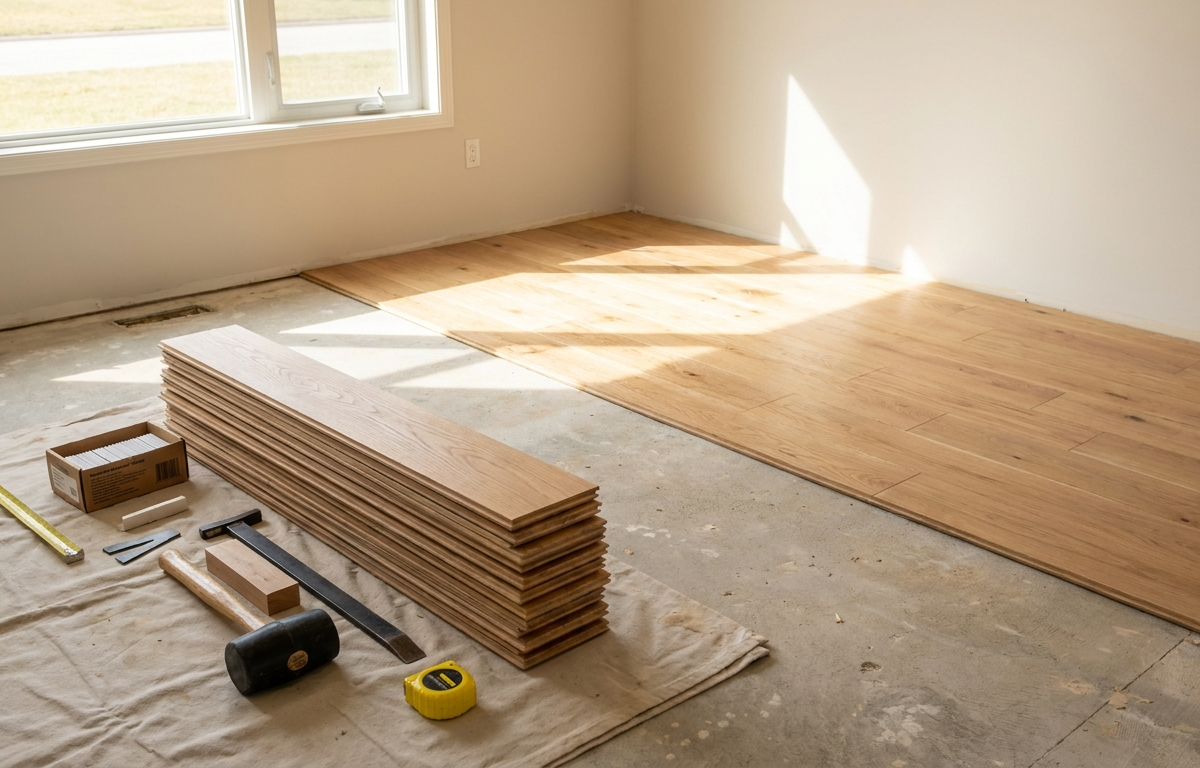
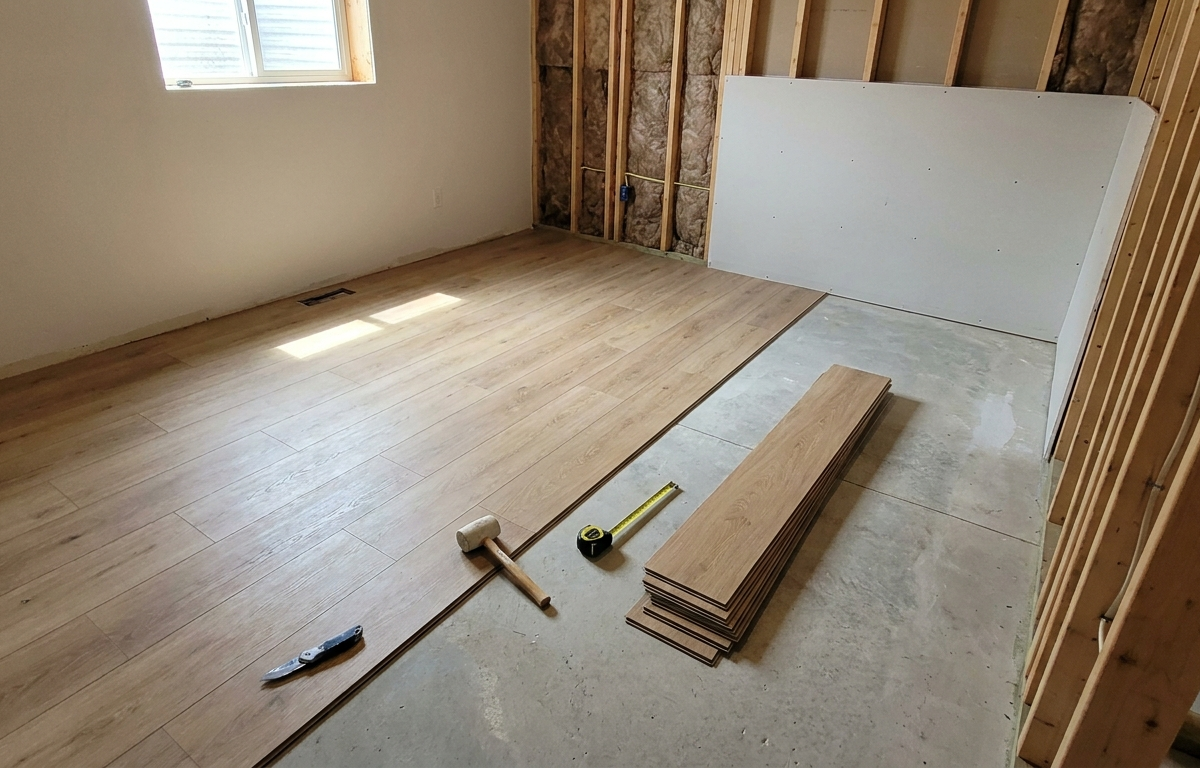
Say you're bidding a 267-square-foot basement rec room in LVP. SideWRK's real flooring rate data (see the full side-work rate report, or run your own numbers on the flooring installation cost calculator) prices that at $6 a square foot all-in for labor and material — a $1,600 ticket, in line with what a real LVP/laminate install runs. Before you write that estimate, you check the subfloor. It reads 14% moisture — high for OSB, which should sit under 12% — and that's not a sales tactic, it's a real problem. Lay LVP over a subfloor that wet and you'll get cupping or adhesive failure inside a year, and the callback won't be a warranty claim, it'll be a customer who tells everyone they know not to hire you.
So you write two lines instead of one: $1,600 for the floor, $500 for the subfloor repair to dry it out and fix it first — a real ticket price for that job, not a padded add-on — for a $2,100 total, priced honestly line by line. That's the moment a homeowner decides you're not just another guy with a nail gun. It's also the moment that gets you the name of their sister who's redoing her kitchen next spring.
| Job | Real ticket | Unit |
|---|---|---|
| Floor install | $1,800 | $6/sq ft all-in |
| LVP / laminate install | $1,600 | $6/sq ft all-in |
| Tile install | $2,400 | $6/sq ft all-in |
| Hardwood refinish | $1,400 | flat |
| Carpet install | $1,200 | flat |
| Subfloor repair | $500 | flat |
I'd rather lose a bid to a competitor who tells the homeowner exactly what they want to hear than win it that way myself. The redo costs money once. The referral you lose because the floor buckled six months later costs you for years, and you'll never even know it happened — the homeowner just quietly stops recommending you.
Don't skip the paperwork on job one
Your first flooring customer is also the one most likely to ask "are you insured?" and the one you're least prepared to answer confidently on, simply because you haven't said it out loud yet. Have the answer ready, and put the estimate in writing before you start — a scope of work with the subfloor condition noted, the moisture reading recorded, and what's included in each line. If the floor does have an issue later, that record is what tells the story honestly, for both of you. A written estimate the homeowner approves before you cut a single plank, with the moisture note and photos attached to the job, beats reconstructing what you told someone from memory six months later. That's the whole job description for SideWRK's flooring setup — it's built to hold that record, not just the invoice.
FAQ
How do I get flooring installation customers with no reviews yet?
Skip the lead-gen sites at first — they favor installers who answer fastest, not installers who are new. Instead, build relationships with two or three flooring showrooms and the design counter at a local lumber yard; they already have customers who bought material and need an installer, and one well-handled referral keeps the leads coming for free.
Is Thumbtack or HomeAdvisor worth it for a new flooring installer?
They can work eventually, but the same job typically gets shown to four or five pros at once, and homeowners tend to hire whoever calls back first — a disadvantage when you don't have reviews yet to make a slower response worth waiting for. They're worth revisiting once you've got a handful of finished jobs and photos to show.
What's a moisture meter and do I actually need one?
A pin-type moisture meter is a roughly $30 tool that reads how much moisture is sitting in a subfloor. OSB should read under about 12%; anything higher risks cupping or adhesive failure under new flooring. Checking it in front of the homeowner before you quote turns a hidden risk into an honest, priced line item instead of a surprise callback.
How do I approach a flooring showroom about referral work?
Go in on a quiet weekday, ask for whoever runs the flooring department, and introduce yourself with a card and a number that gets answered. Don't undercut their material pricing on the first job — showrooms refer installers who make their own sale look good, not the cheapest guy in town.
What should a flooring installer's first estimate include?
The scope of work broken into real lines — not a single lump sum — including subfloor condition if you checked it, the material and install method, and what's excluded. A written, itemized estimate the customer signs off on before work starts protects both of you if a question comes up later.
Ready to send an estimate that looks like it came from someone who's done this before? Start your free 14-day trial — no card required, and it's already priced for flooring work. The same playbook works in a neighboring trade — see how epoxy garage floor installers land their first customers.