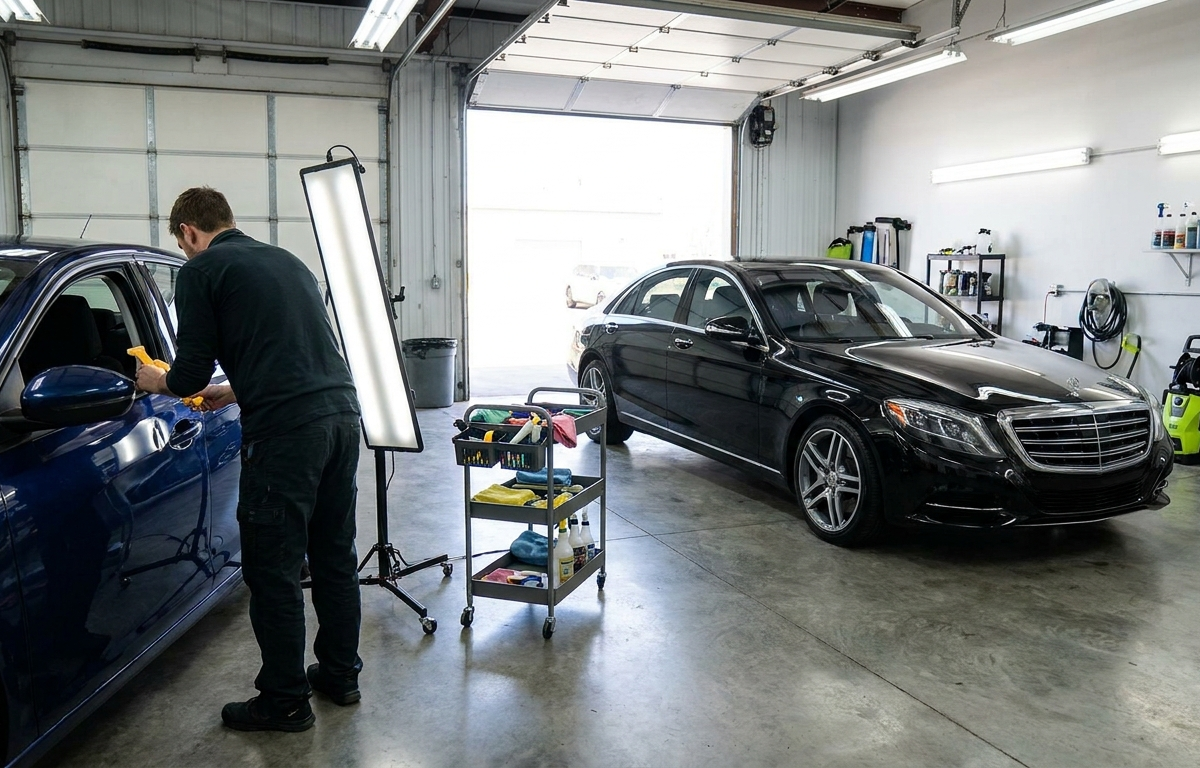
You're not going to find your best PDR customers on a lead-gen site. They're already sitting in a detailer's bay, getting a wash and wax, with a door ding the owner has been meaning to deal with for six months and has simply never bothered to call anyone about.
Most advice on growing a paintless dent repair business says some version of "partner with local detailers for referrals" and stops there, like the referral just happens because you shook someone's hand once at a car show. It doesn't. Detailers already have the exact customer you want, standing in front of a clean, well-lit vehicle, in a good mood because their car looks great — and if you're not physically showing up where that's happening, someone else is going to be the name they hand the customer.
Why this pairing actually works on the numbers
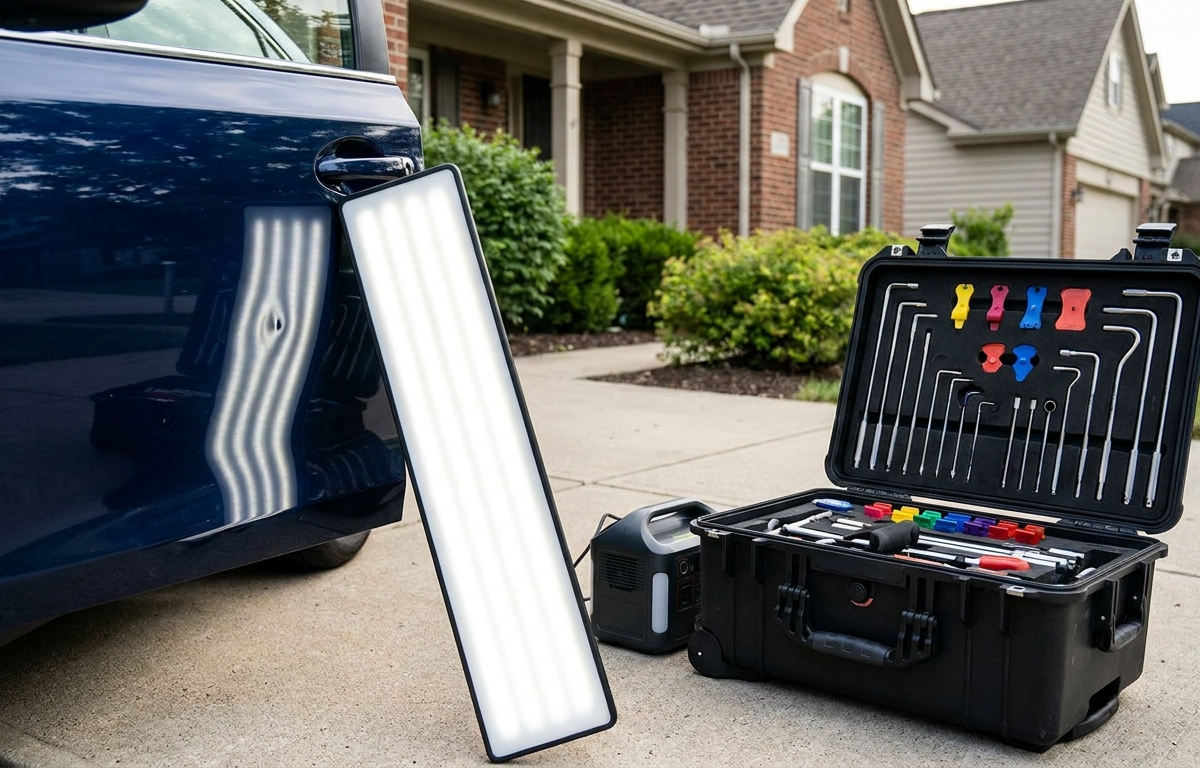
PDR is one of the highest-margin trades SideWRK tracks. The rate report puts a first-dent minimum around $150 with labor share near 95% — meaning almost the entire ticket is your time and skill, not materials. Compare that to a trade like window tinting, where film cost eats a real chunk of every job. A dent doesn't need parts. It needs a trained set of hands and a light board, which is exactly what a detailer's bay already has sitting next to it: good lighting and a clean, dry car.
That labor-heavy math is also why bundling matters more here than almost any other trade. A single dent visit means one trip charge covering one job. A visit where the detailer flags three dents on the same vehicle means one trip charge covering three tickets — and the second and third dents on the same panel typically price at roughly half the first-dent rate, so they're pure incremental profit on top of a visit you were already making.
The math on a real bundled job
Here's a ticket built off SideWRK's actual PDR menu, not a made-up example:
| Line item | Price |
|---|---|
| Medium dent (golf ball), driver door | $250 |
| Additional dent, same panel | $75 |
| Additional dent, rear quarter panel | $75 |
| Total | $400 |
That's a $400 ticket from one trip, found because a detailer noticed three dents while buffing a car they were already working on and texted you a photo instead of letting the customer drive off none the wiser. Compare that to three separate cold-call jobs you'd have to source, quote, and drive to individually — same total revenue, a fraction of the windshield time.
Stop waiting for the referral to come to you
The contrarian part of this isn't the partnership idea — everyone already tells you to "network with detailers." It's what most of that advice skips: don't wait by the phone for a referral call. Show up.
Ask a detailing shop if you can leave a stack of your cards at the front counter, sure, but that's the weakest version of this. The stronger move is being the tech they text a photo to mid-job, because you've made it fast and low-friction for them to flag something without stopping their own work. A detailer who has to call you, explain the damage, and wait for you to swing by later loses momentum — and momentum is the whole game when the customer's car is right there, already out of the garage, already paying for services that day.
Some things that actually move this from a business card in a drawer to real bundled tickets:
- Trade the detailer a discount code or a flat referral credit for every customer they flag — not a vague "I'll take care of you," an actual number written down.
- Give them your cell, not a shop line, and tell them a photo and a "got a minute?" text is faster than a phone call for both of you.
- Offer to do the walk-around yourself on their busiest intake days, so the flagging isn't extra work on their end at all — it's you, doing your own job, on their lot.
- Send the detailer a photo of the finished repair. It costs you nothing and gives them proof to show the next customer who hesitates on the upsell.
None of that requires a formal contract or a shared storefront. It requires you treating the detailer's bay the way a plumber treats a general contractor's job site — as a standing source of qualified work, worth showing up to consistently instead of once.
Price the dent while the car is still there
The other mistake operators make: quoting the dent later, after the customer has left the lot. By then you've lost the moment when the car looked great and the customer felt good about spending money on it. If you can get to the vehicle within the same visit — even a same-day callback — you're quoting against a customer who's already in a "yes" mood, not one who's had a week to talk themselves out of it.
Document it the way the trade actually protects you: note whether the panel is aluminum (typically a 25% add, since the pull is harder) before you quote, and photograph the dent and any prior touch-up work you find on the panel. That paperwork isn't just a formality — it's what keeps a disputed "you caused this" conversation from turning into a bad review six weeks later.
If you want to see how a bundled multi-dent ticket actually builds inside the app — first dent at full rate, each additional dent auto-discounted — the PDR trade setup shows the menu pricing live, and the dent repair cost calculator is worth sending to a detailer partner so they can ballpark what to flag before they even call you.
FAQ
How much should I charge for a second dent found on the same panel during a detail job?
Additional dents on the same panel typically price around half the first-dent rate — commonly $75 versus a $150–$250 first dent, depending on size. It's an incremental add to a trip you're already making, not a full second visit.
Is it worth offering detailers a referral fee for flagged dents?
Yes, when it's a specific, written number rather than a vague promise. A flat credit or discount per referred customer gives the detailer a real reason to text you photos instead of just mentioning your name if the customer happens to ask.
Do aluminum panels really cost more to repair?
Yes. Aluminum panels typically price about 25% higher than steel because the pull is harder and the metal is less forgiving of technique. Note it on the estimate before you start, since a customer comparing your quote to a steel-panel price elsewhere will otherwise assume you're overcharging.
Should I quote a dent repair on the spot or wait and send an estimate later?
Quote it on the spot whenever you can. A customer standing next to a car that just came out of detailing is in a better mood to approve small repair work than one who's had days to decide the ding isn't worth the money after all.
What's a fair split between full-time detail shops and mobile PDR techs?
There's no single standard rate, so negotiate a specific number rather than a vague "we'll work it out" — a flat dollar credit per referred job is easier for both sides to track than a percentage, and it avoids awkward conversations about your actual repair pricing.
Every dent a detailer flags for you is a ticket you didn't have to advertise for. Start your free 14-day trial — no card required — and get your dent menu and referral tracking set up before the next bundled job walks in.