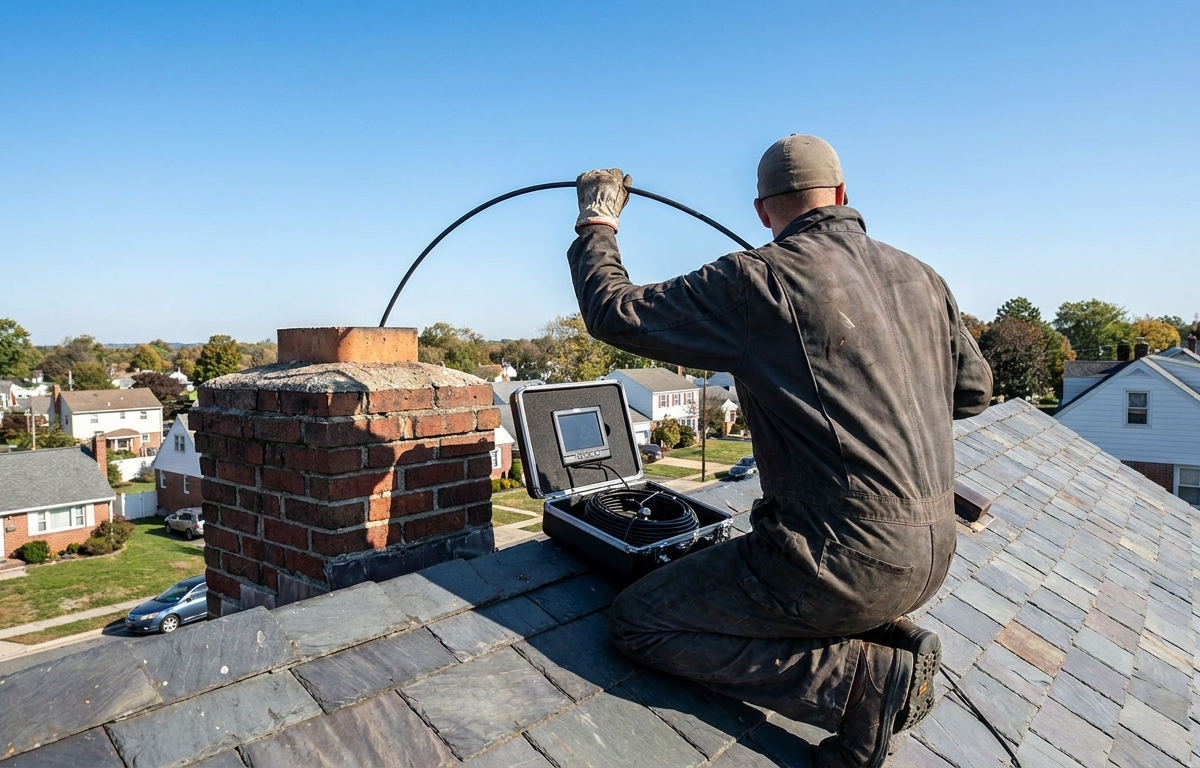
Most states don't have a chimney-sweep-specific license. A handful do — California and Virginia lean on general contractor licensing for parts of the work, and a few counties want a business registration on file — but for most of the country, there's no state board handing out a "chimney sweep license" the way there is for a plumber or an electrician. That surprises a lot of guys starting out, and it's also why so much of the generic "get licensed" advice floating around misses what homeowners are actually checking before they let someone climb on their roof with a camera and a wire brush.
The Three Letters That Actually Matter: CSIA
What homeowners search for — and what insurance companies and referral sites lean on — is the CSIA credential from the Chimney Safety Institute of America. It's not a government license. It's an industry certification, and on real jobs it does more work than a state license would, because it's the one thing a nervous homeowner can Google and verify before they hand you their credit card number.
Earning the CCS (Certified Chimney Sweep) credential takes a minimum of 40 hours of documented sweeping experience or the CSIA Fundamentals of Chimney and Venting Systems course, a written exam covering masonry chimney construction, liners, draft and smoke problems, chimney fire risk, carbon monoxide hazards, and NFPA 211 code, plus signing the CSIA Code of Ethics. The exam runs somewhere in the $175–$225 range depending on membership status — check csia.org for the current fee before you register, since it's the kind of number that changes year to year.
Here's the math that makes the decision easy. Real ticket data from SideWRK's side-work rate report puts a standard Level 1 chimney sweep at roughly $189 and a Level 2 camera inspection at $279. Two Level 1 jobs — one weekend's work for most solo operators — cover the entire exam fee with room left over. After that, every certified job you book is one more data point a homeowner can check against your name before they ever meet you in person.
Certification Isn't Insurance — Don't Let It Stand In
Here's where the generic advice gets sloppy: CSIA certification and liability insurance are two completely different things, and having one says nothing about the other. You can be fully certified and carry zero insurance. You can be insured and never sit the CSIA exam. A homeowner — or, more often, a property manager or insurance adjuster before a home sale — isn't asking "are you certified," they're asking for a Certificate of Insurance, and that's a document your insurance carrier issues, not CSIA.
General liability coverage matters more in this trade than in most. You're the one telling a homeowner their flue is safe to burn in, and if a chimney fire happens six months after your sweep, the certification on your wall doesn't answer that call — your insurance does. Commercial auto coverage matters too, the moment you're driving a ladder rack and a shop-vac full of creosote between jobs instead of a personal vehicle.
None of that means SideWRK handles your compliance for you — it doesn't, and no app should claim to. What it means is keeping the records your state and your insurer actually require somewhere you can find them fast: your CSIA number, your COI, your inspection notes, all attached to the job instead of buried in a filing cabinet or a shoebox on the passenger seat.
What This Looks Like on a Real Invoice
Say you run a Level 2 camera inspection — SideWRK's rate data puts that job at $279. You find creosote glaze building up and a rusted cap that needs replacing. The honest move is documenting exactly what you saw, not just quoting the fix: "Level 2 recommended — creosote glaze noted; cap rusted, replacement quoted." That line, sitting on a branded document with your CSIA number and insurance on file, is worth more to the sale than any pitch you could make standing in the driveway. It shows the homeowner you found something real, not something invented to pad the ticket — and it gives them, and you, a record if the question ever comes back up.
A napkin estimate can't carry any of that. A branded document that shows license status, CSIA certification, and photos of the actual creosote buildup does the selling for you, before you say another word.
Where the License Question Still Applies
"No state license required" isn't true everywhere, and it's not permission to skip checking. Some states require a home improvement contractor license for anything beyond basic sweeping — cap installs, crown repair, or masonry work on the chimney structure can cross into contractor-licensed territory even in states with no sweep-specific license. City and county business licenses are close to universal, even where the trade itself isn't regulated. The honest answer is the same one every legit operator gives: check your specific state and city requirements before you take the first paying job, because "most states don't require it" is not the same as "your state doesn't."
The Actual Order of Operations
For a solo sweep starting out, the sequence that actually gets you booked looks like this: general liability insurance first (non-negotiable, covers you from day one), CSIA certification second (the credential customers and insurers recognize, and it pays for itself in two jobs), state and local registration third (varies by where you work, so verify it directly), and only then worry about the marketing. A homeowner comparing three quotes on a chimney job will pick the CSIA-certified, insured operator over the cheaper one with neither, almost every time — the credential is doing sales work, not just paperwork.
FAQ
Do chimney sweeps need a state license?
Most states don't have a chimney-sweep-specific license, though a few — including California and Virginia — require contractor licensing for parts of the work, and most cities require a general business registration regardless. Requirements vary enough by state and city that you should verify directly with your local licensing office before taking paid work.
What is CSIA certification and is it required?
CSIA (Chimney Safety Institute of America) certification isn't a legal requirement anywhere, but it's the credential homeowners, insurers, and referral platforms actually check for. Earning the CCS credential requires 40 hours of documented experience or the Fundamentals course, a written exam on chimney systems and safety, and signing the CSIA Code of Ethics.
How much does CSIA certification cost?
Exam fees typically run in the $175–$225 range depending on CSIA membership status, though you should confirm the current fee at csia.org before registering since it can change. At an average $189 per Level 1 sweep, most operators recoup the exam cost within two jobs.
Is CSIA certification the same as being insured?
No — they're completely separate. CSIA certifies your knowledge of chimney safety; it says nothing about your liability coverage. You need general liability and, if you're driving between job sites for work, commercial auto insurance, verified through a Certificate of Insurance from your carrier, regardless of certification status.
What should a chimney sweep invoice actually document?
A real inspection finding (not an invented one), the specific service performed (Level 1 sweep, Level 2 camera inspection, cap or crown repair), your CSIA certification number, and proof of insurance on file. That combination on a branded document does more to win the next job than any sales pitch delivered in the driveway.
Start Building the Paper Trail That Gets You Hired
SideWRK keeps your CSIA number, insurance info, and inspection notes attached to every branded estimate and invoice for chimney sweep work — so the paperwork that actually wins the job is ready before you knock on the door. Check the chimney sweep cost calculator for real Level 1/2 pricing, see it running in the live demo, or start free. Five jobs a year free, no card, then $19/mo or $190/yr.
For more on the paperwork side of side work, see do you need a plumbing license for side work and how to invoice for appliance repair and get paid fast.