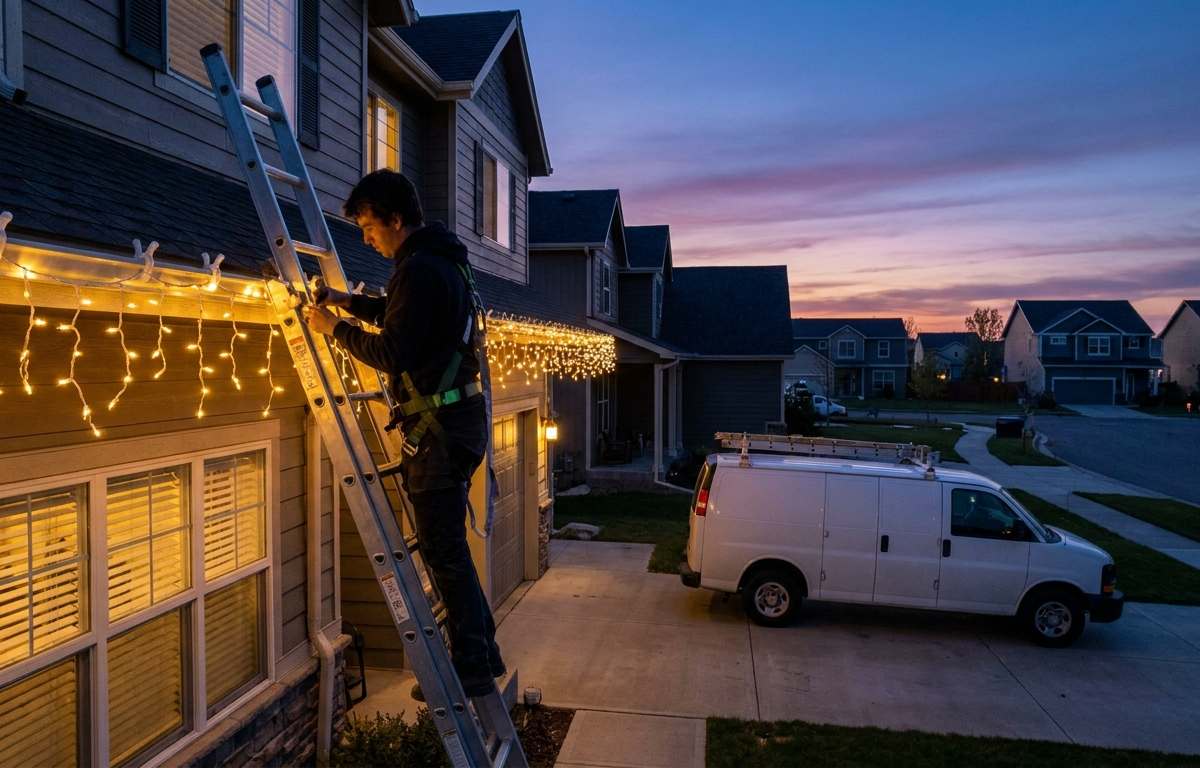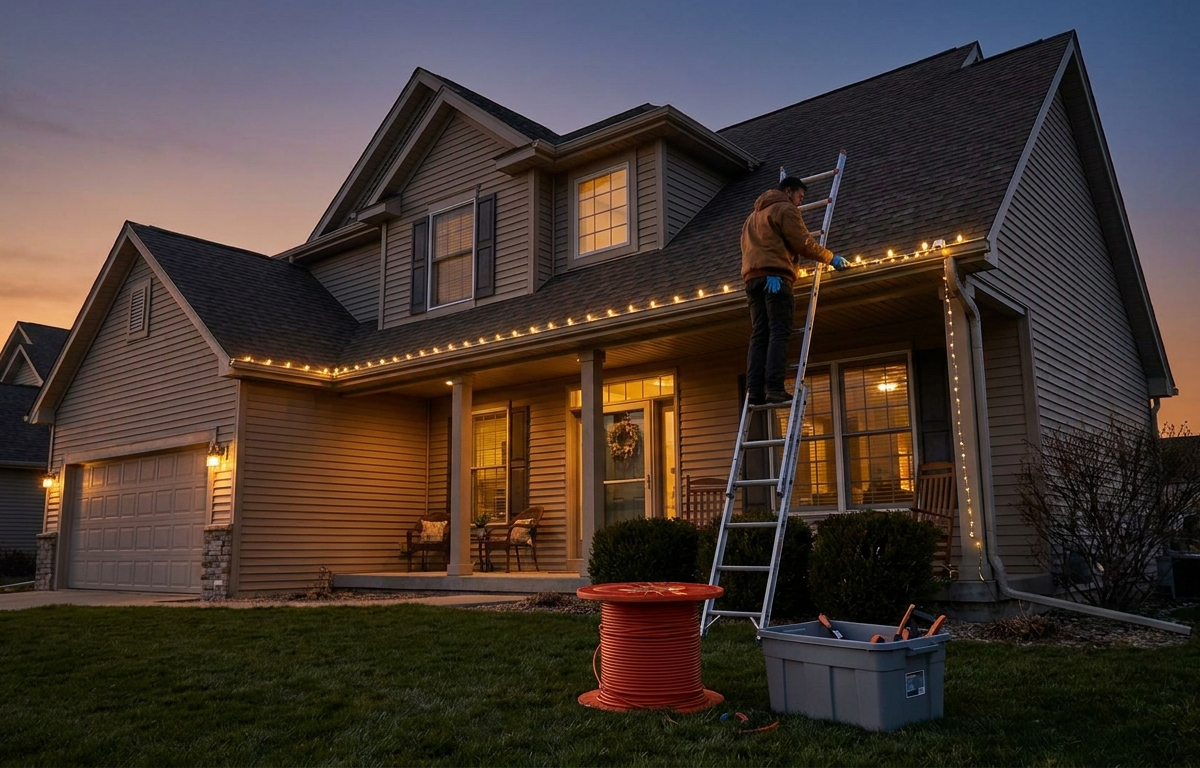
A 140-foot roofline. Four trees to wrap. Five wreaths on the columns out front. That's a real ticket, not a guess, and by the time you're done bidding it in your head instead of on paper, you've probably already low-balled it.
Most "Christmas light installation cost" pages online will tell you homeowners pay somewhere between $2 and $7 a linear foot, average project around $400. That range is wide enough to be useless to you as the person actually climbing the ladder. It also hides the bigger mistake operators make with this trade: pricing it like a one-time job when it's really a two-visit annual contract you've already sold yourself, if you set it up right.
Price the roofline by the foot, not the house
Seasonal lighting isn't one job — it's four or five different billing units stacked on one invoice, and treating it as a flat "per house" number is how you undercharge the tricky roofs and overcharge the simple ones. SideWRK's rate report tracks a $6-per-linear-foot roofline rate for lighting installers, with labor running about 55% of that — the rest is the lights, clips, and the timer you're leaving at the eave. That labor share matters: at 55%, this trade eats more into materials than something like window cleaning, so the temptation to shave the per-foot rate on a "quick roofline" costs you more than you think.
Here's a real ticket built the way the job actually bills:
| Line item | Qty | Rate | Total |
|---|---|---|---|
| Roofline lights, install | 140 ft | $6.00/ft | $840 |
| Tree & bush wrap | 4 items | $50/item | $200 |
| Wreaths & garland | 5 items | $50/item | $250 |
| Subtotal | $1,290 |
That's the Whitfield job — a two-story colonial with a straightforward roofline and a modest amount of tree work. No trick pricing, no padding. Run it at 55% labor share and your real cost sits around $580, leaving roughly $710 in gross margin before fuel, ladder wear, and whatever you paid for the lights themselves. If you quoted this one flat at "around $400 like the internet said," you'd have handed away most of a week's fuel budget on a single house.
The mistake: pricing this as a one-time job
Every generic guide treats holiday lighting like a single autumn transaction — quote it, hang it, get paid, move on. That's backwards for how the trade actually makes money. The job comes with a built-in second visit baked into the calendar: takedown in January, and — if you store the customer's lights over the off-season — a guaranteed re-install next November with zero sales work required.
Look at what a full-season client actually generates on the SideWRK ledger:
| Line item | Qty | Rate | Total |
|---|---|---|---|
| Takedown & storage | flat | — | $250 |
| Re-install next season | 100 ft | $6.00/ft | $600 |
That's $850 of near-guaranteed revenue for a customer who's already said yes once, sitting on your books before you've made a single cold call next fall. Most operators skip the storage offer because it means keeping a customer's lights in a bin in the garage for ten months — which is exactly why it works. The competitor who hands the lights back in January has to re-sell that customer from zero. You just have to show up.
If you're not offering "we store it, we hang it again next year" as a standard line on the invoice, you're leaving the highest-margin part of this trade on the table. Write it into the estimate the first time, even if the customer doesn't take it — plant the idea before they've forgotten your name by February.
Don't sleep on the shoulder-season add-ons
The menu doesn't stop at roofline and wreaths. Halloween and fall decor is its own flat-rate line — SideWRK's dataset shows it pricing around $400 for a modest yard setup — and it's the easiest upsell in the entire trade because you're already knocking on the door in September to book the Christmas install. Ask about Halloween while you're measuring the roofline for December. You're on the ladder either way; the second trip is the one you should be trying to avoid, not the second sale.
Book now, price for the rush later
You're reading this in August, which means most of your competitors haven't started calling yet. The topics doc for this trade says the Sept–Dec ramp is when demand books out — early birds get the good install dates, and the ones who wait until Thanksgiving get whatever's left on the calendar, often at a rushed price that doesn't reflect the risk of working a cold roofline in December weather. Lock your rate now, before the calendar fills and before you're negotiating with a customer who already knows three other installers are booked solid.
The seasonal lighting trade page walks through how the app handles this mixed billing — roofline per foot, wraps and wreaths per item, takedown and reinstall as their own lines — before your first quote goes out this season. And if early-season marketing is where you're stuck rather than the pricing, the early-booking playbook covers the outreach side.
Run the cost calculator against your own roofline footage before you quote the next one — it's built on the same per-foot logic as the ticket above, not a flat average pulled from a national survey.
FAQ
How much should I charge per linear foot for Christmas light installation?
Most professional installers price roofline work between $5 and $7 per linear foot, with materials and clips running about 45% of that and labor making up the rest. A 140-foot roofline at $6/ft comes out to $840 before tree wraps, wreaths, or any other add-ons.
Should I charge extra for takedown, or is it included?
Takedown should always be its own line, not a freebie folded into the install price. A flat takedown-and-storage fee (commonly around $250) covers the labor of pulling everything down safely in January and gives you a documented reason to store the customer's lights — which is what sets up next year's reinstall.
Is storing a customer's lights over the off-season worth the hassle?
Yes, if you have the garage space. A stored-lights customer typically becomes a near-automatic reinstall the following November, priced the same per-foot rate as the original install, with no marketing spend required to win the job back. The bin space costs you nothing but square footage; the guaranteed rebooking is the payoff.
What should I charge for tree and bush wrapping separate from the roofline?
Tree and bush wraps are typically priced per item, not folded into the linear-foot roofline rate, since wrap time varies a lot by tree size and branch density. A flat $40–$60 per tree or bush is standard and keeps a yard full of trees from turning into an underpriced afternoon.
When should I start booking Christmas light installs?
Start booking in late summer, before the September ramp. Installers who wait until after Halloween are quoting into a shrinking calendar, competing on price against operators who are already booked out, and losing the best install dates to whoever called first.
Christmas light installers who wait until it's obvious business is coming are already behind. Start your free 14-day trial — no card required — and get your roofline, tree-wrap, and takedown pricing set up before the calls start rolling in.