Do the brakes. Get paid. Go hunt another stranger. That loop is how most mobile mechanics run, and it is the most expensive way to run a wrench.
I turn wrenches at a dealership all week, and the shop knows one thing most side guys never learn: the money was never in the first repair order. It's in the file. A customer with history comes back without a coupon, approves work faster, and doesn't argue price. You can build the same thing out of a truck. Here's what one customer is actually worth — real numbers, not vibes — and how to keep them for five years without discounting a dime.
Follow the car, not the job
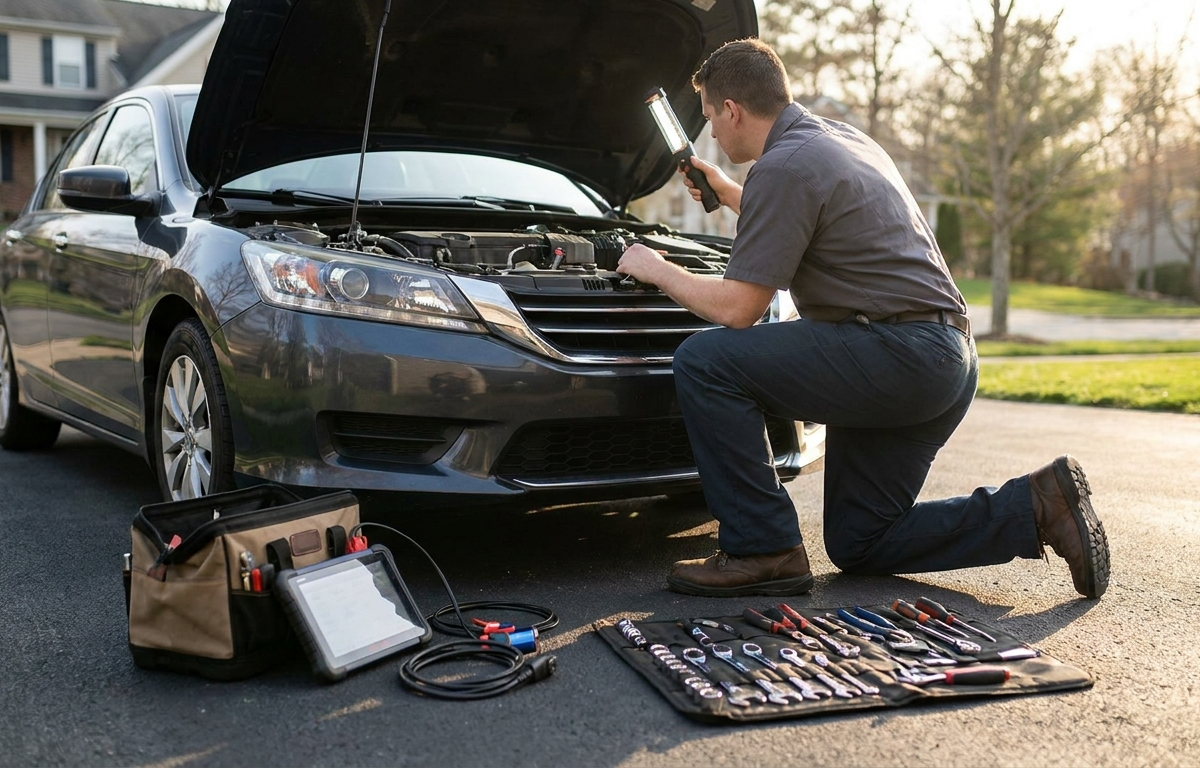
Take the most common first call there is: front brakes on a stranger's Accord. Pads and rotors. Priced straight, the ticket looks like this:
| Line | Amount |
|---|---|
| Pads and rotors (parts) | $200 |
| Labor — 1.6 hr at $110/hr | $176 |
| Shop supplies | $4 |
| Ticket total | $380 |
That $110 an hour isn't a guess. It's where mobile mechanic labor sits in the 2026 side-work rate data, and $380 is what a front brake job runs almost anywhere. After parts, you keep $180.
Now stop looking at the job and follow the car for five years:
| Year | Work | Billed |
|---|---|---|
| 1 | Front brakes $380, oil & filter $75 | $455 |
| 2 | Two oil changes $150, battery $240 | $390 |
| 3 | Two oil changes $150, serpentine belt $180 | $330 |
| 4 | Two oil changes $150, diagnostic $120 | $270 |
| 5 | Two oil changes $150, two rotations $90, front brakes again $380 | $620 |
Five-year total: $2,065 — from one person who never shopped you again after job one. And when that customer hands your number to a neighbor whose car runs the same arc, the first $380 brake job quietly becomes a $4,130 decision.
Nobody prices the first job like that. Everybody should.
Never buy loyalty with a discount
Here's the part I'll argue with anyone about: the "$20 off your next oil change" referral coupon is the worst deal in this trade.
Run the math on it. An oil change bills $75. The filter and oil cost you $30, so the ticket carries $45 for your time. Hand back $20 and you just gave away nearly half the margin on the visit — to a customer who was already coming back. Worse, you taught them your labor is negotiable. The dealership up the road charges more than you, discounts nothing, and keeps its bays full, because what it sells is the record, the heads-up, and the fact that the same name answers the phone. You can sell all three cheaper without ever touching your rate.
Loyalty programs are for coffee shops. What follows is what actually retains.
The first job is an audition
A new customer is nervous. They're letting a stranger touch the car they need for work tomorrow, and they're quietly deciding whether you exist after today. Three things win the audition, and price isn't one of them.
Show up when you said. If you're running late, a two-minute text saves the whole relationship.
Put the number in writing before you start. An itemized estimate they approve from their phone reads professional. A figure spoken over the hood reads like a guy with a wrench.
Then do what you said and nothing else. No surprise charges, no "while I was in there" work they never approved. One sketchy line item and the file closes forever.
Leave a record they can't get from a stranger
The second the job's done, people lose your number. The fix is the paper trail.
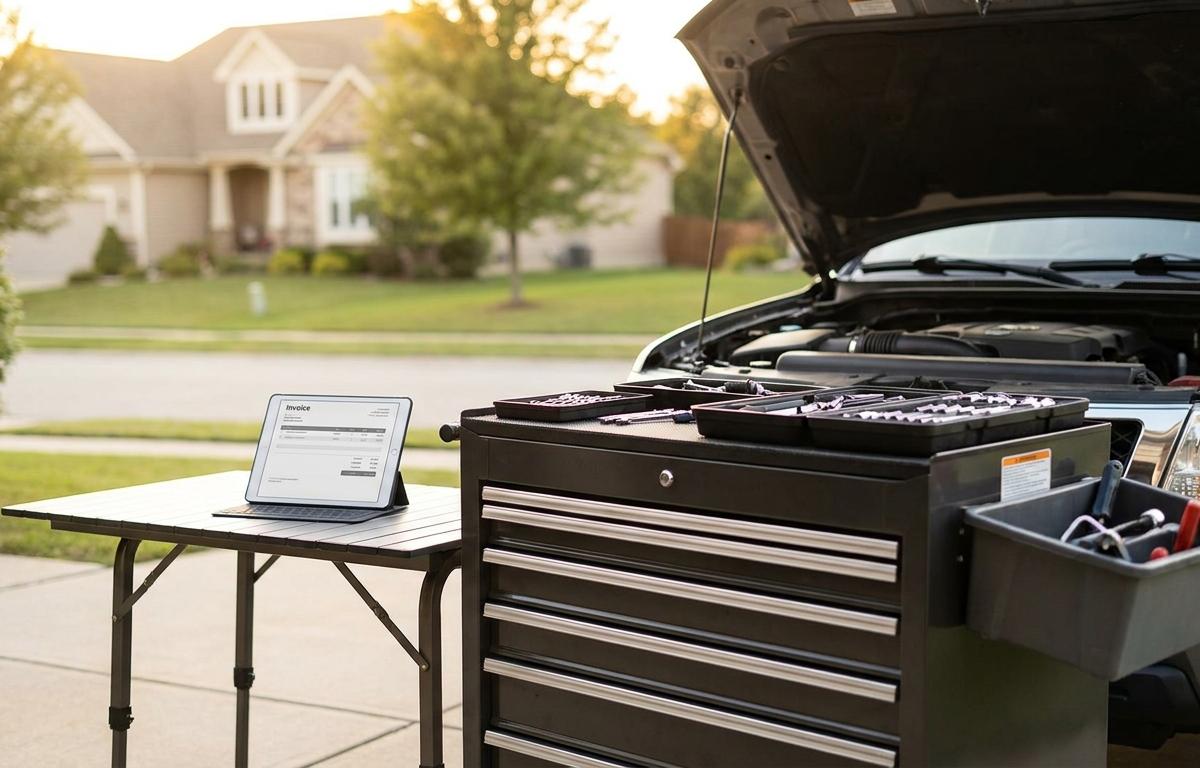
Every visit gets an itemized invoice they keep: what went on the car, which parts, what it cost, the date and mileage. That record does two jobs at once. At trade-in time it proves the car's history, which makes you part of the car's value. And at the next repair it makes calling anyone else feel like starting over. When their year-4 check-engine light comes on, the $120 diagnostic goes to whoever holds the file. That's you or it's nobody.
Flag what's coming — that's the whole retention plan
You just had the car in the air. You know things the owner doesn't: tires at 4/32, a serpentine belt starting to crack, pads with one season left. Say it out loud, as a heads-up, not a pitch:
"Everything I fixed is solid. Two things to watch — that belt's got maybe a year in it, and I'd budget around $180 to do it before it lets go on the highway."
Look at the five-year table again. The year-3 belt job, the year-5 brake job, the battery in year 2 — none of those calls happen by accident. Each one exists because you named it early, put a real number on it, and let the customer plan for it. You're not upselling. You're scheduling the future, one honest sentence at a time.
Photos close the loop. A picture of the cracked belt or the rusted rotor sells the work better than any speech, and it lives in the record as proof you called it first.
Book the next visit before you shut the hood
The cheapest appointment you'll ever get is the one you ask for while you're still in the driveway. "Oil's due in about 3,000 miles — want a text when it's time?" Nearly everyone says yes, and a yes costs nothing.
A few days later, one short message: "How's the car running?" Twenty seconds. Almost no one does it, which is exactly why it lands — and it's the natural moment to send the review link, while the relief of a fixed car is still fresh. A handful of real reviews plus a simple page showing your work turns the nervous stranger problem into a solved problem, because your repeat customers do the vouching for you.
That's the whole engine: price the first job like an audition, leave the record, name what's coming with a real dollar figure, book the next visit, collect the review. No coupons anywhere in it.
SideWRK runs that engine from your phone — estimate, approval, branded invoice, job photos, payment, and the customer history that makes you the mechanic with the file. Start your free 14-day trial — no card.
FAQ
What is a repeat customer worth to a mobile mechanic?
Followed over five years, one customer who starts with a $380 front brake job and stays for oil changes, a battery, a belt, a diagnostic, and a second brake job bills about $2,065 — with zero cost to win each visit. One referral who follows the same arc roughly doubles it to $4,130.
Should I offer a discount to get repeat mechanic customers?
No. An oil change that bills $75 carries about $45 for your time after the $30 in parts, so a $20 coupon hands back nearly half the visit's margin to someone already coming back. Keep the rate and sell the record instead: itemized invoices, honest heads-ups, and a booked next visit retain better than any coupon.
How do I get customers to call me instead of a shop for the next repair?
Leave every visit documented — an itemized invoice with parts, mileage, and date — and flag upcoming work with a real number attached, like "budget around $180 for that serpentine belt within the year." The person holding the car's history gets the next call, because switching means starting the file over.
When should I ask a mechanic customer for a review?
A few days after the job, right after a "how's the car running?" follow-up text. The relief of a fixed car is still fresh, the follow-up itself proves you're not a one-and-done stranger, and the review link rides the same thread.