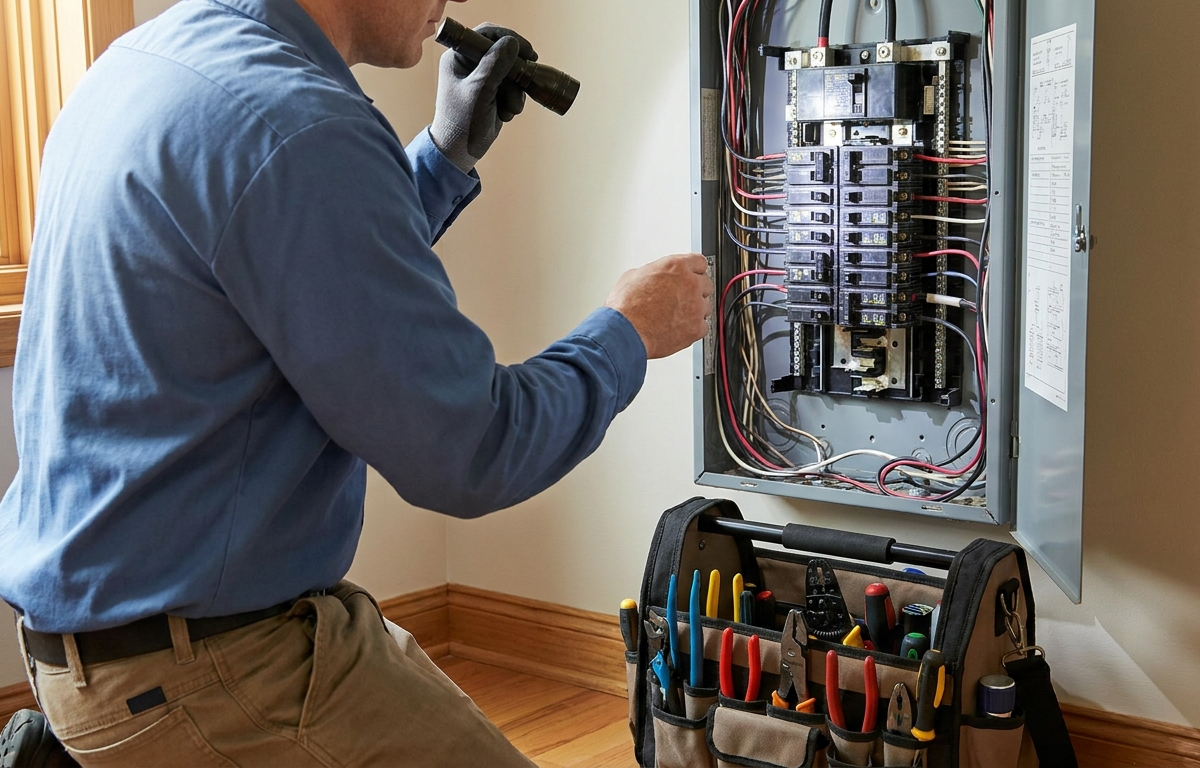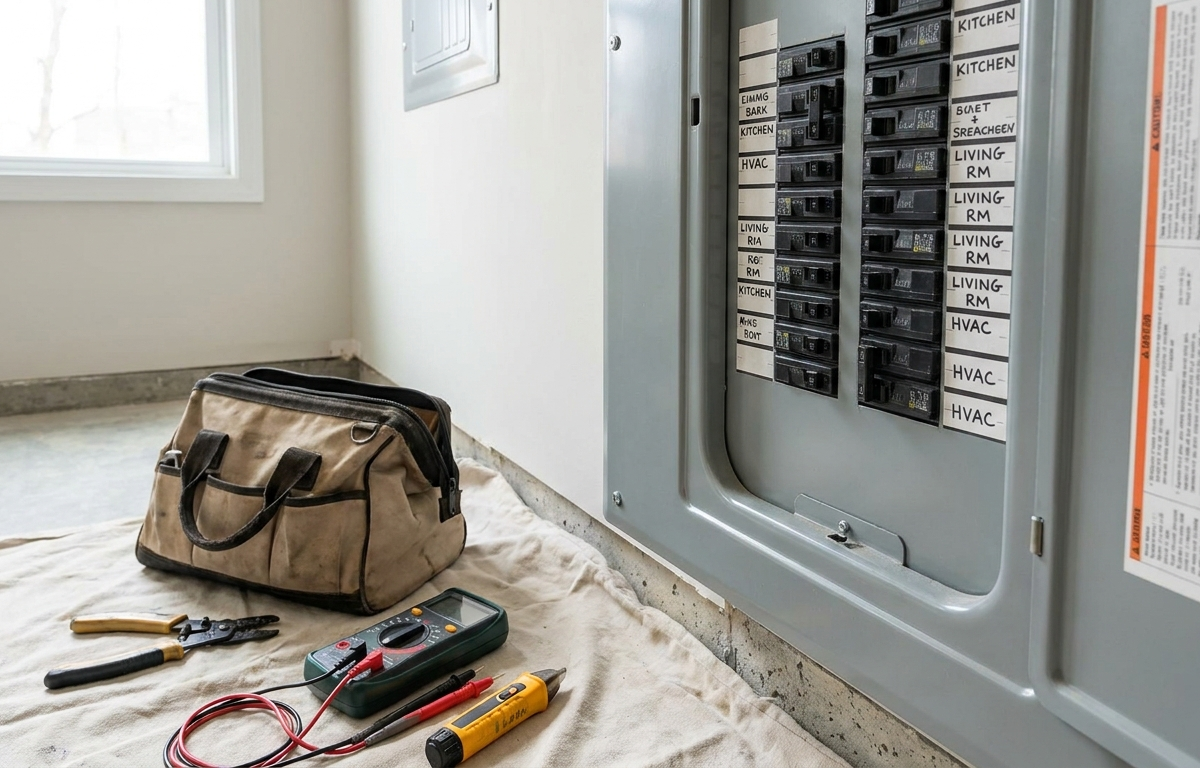
You quote $95 an hour, spend forty minutes chasing a tripped breaker through three junction boxes, and the fix itself takes five. The customer pays for close to an hour of work that looked, from where they were standing, like you stared at a panel and flipped a switch. Nobody's lying here — but nobody's happy either. That's the hourly-rate problem, and it's why more electricians are moving the bulk of their day to flat-rate pricing instead.
Why the hourly clock works against you
Hourly billing is a tax on being good at your job. Say it plainly, because that's what it is: a slower electrician on a bad day bills more than a sharp one who fixes the same problem in a third of the time. The customer with the best tradesman on the job gets the smallest bill, the tradesman who spent twenty years getting fast eats the difference, and the guy still fumbling through the panel gets rewarded for it. No other pricing model punishes skill this directly.
Hourly also puts you and the customer on opposite sides of the clock for the whole visit — every extra minute you spend is a minute they watch add to the total. Flat-rate flips it. You quote the outlet install at $185 whether it takes fifteen minutes or forty-five, the customer knows the number before you start, and your speed becomes profit instead of an argument. The trade-off is real: a job that runs long on a flat rate eats your margin instead of the customer's wallet. So the menu has to come from your own real average time per job, not a guess.
One week, both models, side by side
Here's the argument in dollars. Take a realistic five-call week for a moonlighting electrician — a GFCI install, a ceiling fan on existing wiring, a Level 2 EV charger, a six-can recessed lighting job, and one dead-circuit diagnostic. Bill it both ways: hourly at $95 with materials passed through at cost, versus the flat-rate menu built on the 2026 side-work rate data. Assume you're fast, because you are — that's the point.
| The call | Your time | Hourly ($95/hr + materials) | Flat rate |
|---|---|---|---|
| GFCI outlet install | 30 min | $48 + $22 parts = $70 | $185 |
| Ceiling fan, existing wiring | 1 hr | $95 + $60 hardware = $155 | $250 |
| EV charger install | 3.5 hr | $333 + $300 circuit materials = $633 | $750 |
| Recessed lighting, 6 cans | 4 hr | $380 + $240 cans = $620 | $600 |
| Dead-circuit diagnostic | 45 min | $71 | $125 service call |
| Week total | ~10 hr | $1,549 | $1,910 |
Same five houses, same materials, same tools — $361 more for the week, roughly $1,400 more a month, purely because flat-rate stops handing your speed to the customer as a discount. And look at the recessed lighting line: hourly actually beat the flat rate there, because six cans is slow, methodical ceiling work. That's not a flaw in the model. That's the model telling you which jobs belong on the menu and which ones still deserve the clock.
What the service call fee is actually for
The $125 service call and diagnostic fee isn't padding — it's the cost of showing up: drive time, fuel, and the reality that diagnosing "why does this outlet not work" sometimes takes longer than fixing whatever's wrong once you find it.
The honest way to run it: charge the $125 for the visit and diagnosis, then roll it into the invoice once the customer approves the repair. A customer who calls, gets a same-day electrician, and only pays the diagnostic if they walk away without doing the work rarely feels nickel-and-dimed. One who finds a mystery "trip charge" buried in a bigger invoice does.
Building the menu for your repeat jobs
You don't flat-rate everything on day one. Start with the jobs you already do every week — the ones you can price from memory. The working menu behind the week above:
| Common job | Flat rate |
|---|---|
| Service call / diagnostic | $125 |
| Outlet / GFCI install | $185 |
| Ceiling fan install, existing wiring | $250 |
| Recessed lighting, per room | $600 |
| EV charger install | $750 |
| Panel upgrade | $2,200 |
Two things about that list. First, materials live inside those numbers — figure roughly 40% of a ticket on the bigger installs — so the $750 charger price already carries the breaker, wire, and conduit. Second, track your actual time on the next twenty of each before you lock anything in. If a "standard" outlet swap keeps running forty-five minutes instead of the twenty you assumed, the flat rate moves up, not your patience. Undercharging a repeatable job is the fastest way to make flat-rate pricing hurt you instead of help you.
The panel upgrade deserves its own sentence: at $2,200 it's the biggest number on the menu and the one customers most want fixed in advance. A firm flat price on a scary job is exactly where flat-rate wins work that hourly loses — nobody wants to hear "$95 an hour for however long a panel takes."
When hourly still earns its keep
Flat-rate doesn't replace judgment. An intermittent fault, a panel that's been "fixed" twice by someone else, aluminum branch wiring, anything where you genuinely don't know what you're walking into — that's hourly or a not-to-exceed estimate, not a guess dressed up as a flat number. Most electricians who've made the switch run a hybrid: the menu for the repeatable stuff, $95 an hour plus the service call for anything that starts with "I'm not sure what's wrong." Say which one applies before you start the clock, not after — the same honest-call instinct that HVAC techs use to decide between a repair and a replacement applies here.
Making the switch without spooking regulars
If you've billed hourly for years, don't flip the whole business overnight. Introduce the menu on new customers and the standard repairs first, and let regulars see it on their next invoice with a plain explanation: "Same work, but now you know the number before I start." Most people prefer that. The ones who push back usually just want to know why last month's outlet job was $160 on the clock and this month's quote is a flat $185 — tell them the truth, that the flat rate covers the occasional job that runs long, and they'll get it.
Getting it onto the estimate
None of this matters if the customer can't see it clearly before they say yes. A menu of flat-rate lines plus an hourly option for diagnostics needs to live on a real, itemized estimate — not a verbal number that turns into a surprise invoice. SideWRK's electrician setup prices jobs the way the trade actually works: flat-rate line items, a $95 rate for the work that needs the clock, and a service-call fee visible on the estimate instead of buried in the total. Still figuring out where your numbers should land? Run them through the electrical work cost calculator before you commit a menu to print, or watch the whole flow in the live demo.
FAQ
Should electricians charge flat-rate or hourly?
Run a hybrid: flat-rate for repeatable jobs — $185 outlet installs, $250 fan installs, $750 EV chargers — and hourly at your shop rate plus a service call for diagnostics or anything with unknown scope. The five-call week above bills $1,910 on the menu versus $1,549 on the clock for a fast electrician.
How much should an electrician service call fee be?
$125 covers the visit and the diagnosis. Most electricians roll it into the invoice once the customer approves the repair, so the only person who pays it standalone is the one who declines the work.
What should a flat-rate outlet or GFCI install cost?
$185 is the working number — parts included — assuming your real average time is in the half-hour range on existing wiring. Track twenty real jobs before locking it in; if yours keep running long, the rate moves up.
Does flat-rate pricing cost me money on jobs that run long?
Sometimes, on purpose — that's the risk you're paid a premium to carry. In the worked week, the six-can recessed job billed $20 less flat than hourly. If a particular job type loses consistently, that's data: raise its rate or move it back to the clock.
How do I switch existing customers to flat-rate pricing without upsetting them?
New customers and standard repairs first, then regulars with a plain explanation on the next invoice. "Same work, but you know the number up front" wins most people over once they understand the flat rate also protects them from a slow day.
Ready to price every job the way your trade actually works? Start your free 14-day trial — no card — and see it built for electricians from the first estimate on.