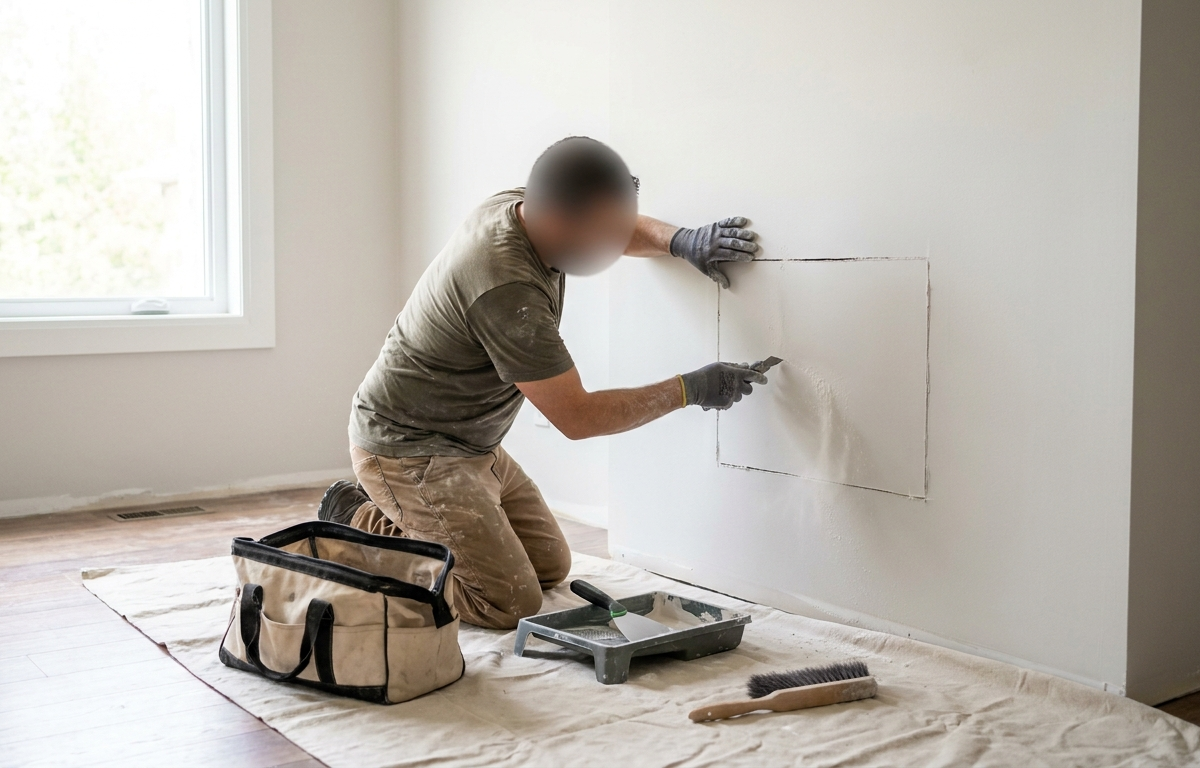
You cut into the wall to patch a doorknob hole and the drywall behind the paper is soft, dark at the edges, and smells like a basement that never dries out. The customer approved a $250 patch job. What you're looking at is water damage that's been sitting there long enough to start feeding mold, and now you have a decision that has nothing to do with drywall technique: how do you tell them without sounding like you're inventing work to pad the invoice.
The problem isn't finding extra work — it's proving you didn't invent it
Homeowners have been burned by contractors who "find" a bigger job once they're inside the wall. That reputation isn't fair to the tradespeople who genuinely find real problems, but you inherit it anyway the moment you say "there's more going on here than we thought." The fix isn't to soften the news. It's to make the problem impossible to argue with.
Take the photo before you touch anything else. Discoloration, soft spots, any visible growth — get it in frame with something for scale, a tape measure or your hand. Write one line of plain description next to it: "Water staining on drywall behind the doorknob patch, soft to the touch, consistent with a slow leak rather than a one-time spill." You're not diagnosing the source of the leak — that's a plumber's job if it's active — you're documenting what you found so the customer sees it themselves instead of taking your word for it.
The patch price died when the wall opened — re-quote, don't pad
Here's where most drywall guys go wrong, and it's worth being blunt about: they try to bolt the new work onto the old number. A $250 patch quote with a $650 "additional damage" adder looks exactly like the shakedown the homeowner was braced for, and it usually underprices the real scope anyway because you're anchored to the small number you started from. The honest move and the profitable move are the same move — retire the patch estimate and price the job that actually exists.
What that looks like in dollars, using the defaults from the 2026 side-work rate data that SideWRK seeds for drywall work (a $2.50-per-square-foot base rate, with common jobs priced as packages):
- Water-damage repair — cut out the wet section stud to stud, bag and dispose, hang new board, tape, three coats of mud, sand: $900
- Texture match across the repaired area so the wall reads as one surface: $350
- Original doorknob patch: absorbed into the cut-out — removed from the estimate
Total: $1,250.
Notice what's not on there: the $250 patch line. You're not stacking new work on top of old work — the repair replaces the patch, and the estimate says so. A customer reading "$250 patch + $1,000 of extras" feels ambushed. The same customer reading a fresh two-line estimate for a documented problem, with the original line visibly struck, feels informed.
Good, better, best — for a problem, not just a product
Once the customer can see what you're seeing, give them a real choice instead of one scary number.
- Good — cut out and re-rock, $900. Remove the damaged section, replace with new board, finish it out. Tell them plainly: this doesn't fix whatever caused the water. If it's a slow leak, it comes back. This is honest, not a downsell — sometimes it's genuinely the right call for a rental or a wall that's getting renovated soon anyway.
- Better — the full repair plus a mold check, $1,250. The $900 repair plus the $350 texture match, with one condition: anything beyond minor surface staining gets a third-party mold inspection before you close the wall. Sealing a colony behind fresh paint turns a drywall job into a lawsuit, and the inspection is cheap insurance for both of you.
- Best — fix the source first, then the $1,250. If you can see or reasonably suspect where the water's coming from — a supply line, a roof leak, grading outside — tell the customer that closing drywall over an active leak just schedules the same repair for six months from now, at a higher price. Refer out to the right trade and say so. "This is a plumbing call before it's a drywall call" builds more trust than pretending you can fix everything. Your scope stays the same $1,250; it just runs second.
Presenting it this way — three real options with real dollar figures — is what separates flagging a genuine problem from padding a bid. The customer picks based on their situation, not your sales pitch.
When to say "this can wait"
Not everything you find behind a wall needs action today. A little surface discoloration from a fixed, decades-old leak that's clearly dry now doesn't need the same urgency as staining that's still damp to the touch. Telling a customer "this looks old and dry, you can leave it as-is if the budget's tight this month" costs you nothing and earns you the next call when something actually is urgent. Trying to sell urgency on something that isn't is the fastest way to become the contractor people warn their neighbors about.
Put it on paper, not just in conversation
Whatever you find, write it into the estimate as a separate, clearly labeled line — never folded into the original price. "Additional scope identified: water-damaged drywall behind original patch area, photos attached" reads completely differently from a total that jumped from $250 to $1,250 with no explanation. The customer approving that estimate on their phone, seeing the photo and the line item side by side, is having a very different experience than the one getting a text that says "gonna be more than we thought."
This is also the moment a branded, itemized estimate earns its keep. A homeowner who's already suspicious of contractor upselling relaxes considerably when the extra work shows up as a documented finding with a photo attached, not a mystery charge. That documentation also protects you if the same wall has a problem again in a year — you have a record of exactly what you found, what you flagged, and what the customer chose to do about it.
SideWRK's drywall trade page is built for exactly this — photos attach directly to the line item, so "found water damage behind patch, see photo" travels with the estimate instead of getting lost in a text thread. If pricing the additional scope is the sticking point, what should I charge helps you land on a rate that covers the extra cutting, drying time, and finish work — not just the patch you originally quoted. Want to see how a flagged-issue estimate looks from the customer's side before you try it on a real job? The live demo walks through it with no signup needed.
For the jobs where the honest answer is "the paint upstream of this repair could use attention too," the painting first customers guide covers how painters and drywall pros end up sharing the same referral pipeline — worth reading if you ever find yourself recommending a painter, or want painters recommending you.
Documenting what you find instead of guessing at it is worth trying on the next job that surprises you. Start your free 14-day trial — no card and see if it changes how customers respond to the news.
FAQ
How do I tell a customer their drywall repair got bigger without sounding like I'm padding the bill?
Photograph the problem before touching it, write one plain sentence describing what you found, and issue a fresh estimate rather than tacking an adder onto the original number. Customers argue with a vague "it's more than we thought" — they rarely argue with a photo of soft, discolored drywall next to a tape measure and a line-itemed $900 repair.
What does it cost to fix water-damaged drywall?
A full water-damage repair — cut out the wet section, replace, tape, mud, and sand — runs about $900 as a package, with a texture match across the repair adding around $350 for a $1,250 total. A simple patch with no water involvement is a $250 job, which is exactly why the estimate has to change when the wall turns out to be wet.
Should I fix water-damaged drywall if I don't know what's causing the leak?
You can, but tell the customer plainly that patching without finding the source just delays the same repair — and price it as the good-tier option, not the recommended one. If you can't identify the leak yourself, say so and point them to the right trade, a plumber or roofer, rather than guessing or ignoring it.
How do I know if mold behind drywall needs a specialist instead of a standard repair?
Small, contained surface staining that's dry to the touch is often within a general repair scope. Visible fuzzy growth, a strong musty smell, or damage spread across multiple stud bays means a mold remediation specialist looks at it before you hang new board — disturbing contaminated material can spread spores through the house, and sealing it behind fresh drywall makes it your problem later.
Is it normal for a small drywall patch to turn into a bigger repair once the wall is open?
More often than homeowners expect, especially around plumbing walls, exterior walls, and old stains that were painted over instead of fixed. It's not a sign the original quote was wrong — it's the reason to document what you find, retire the old estimate, and give the customer priced options instead of a single bigger number.