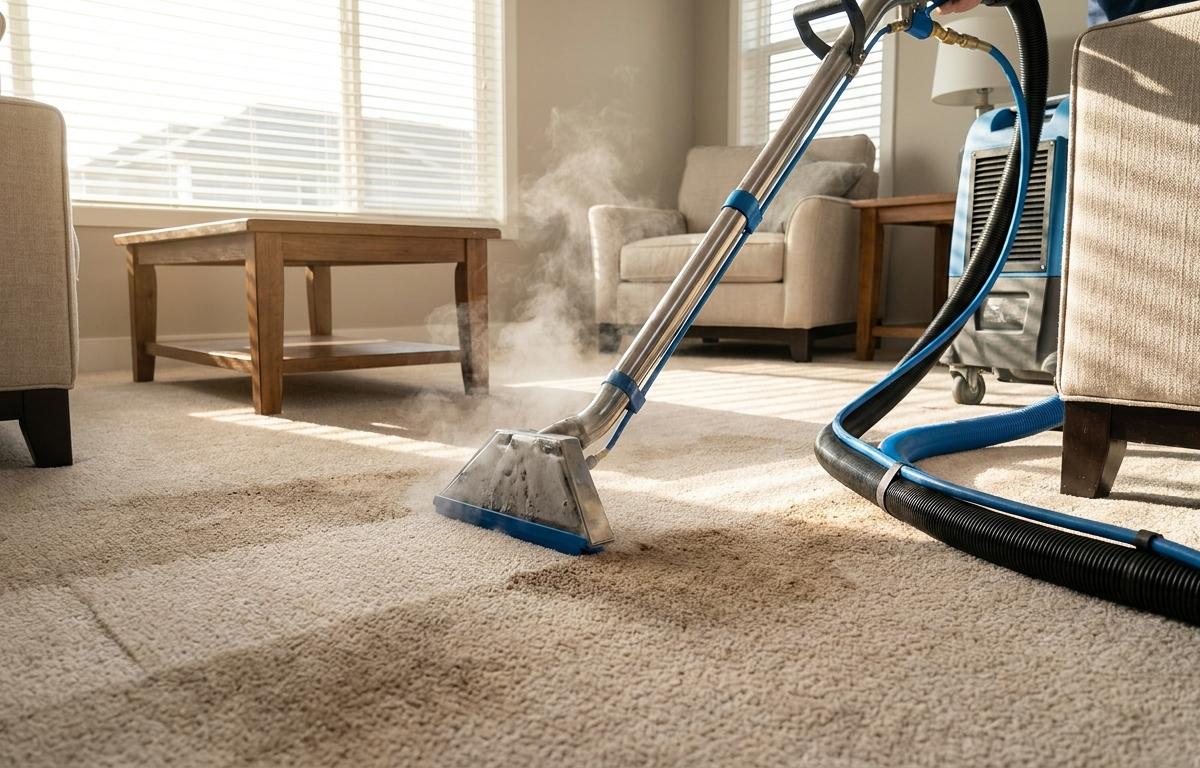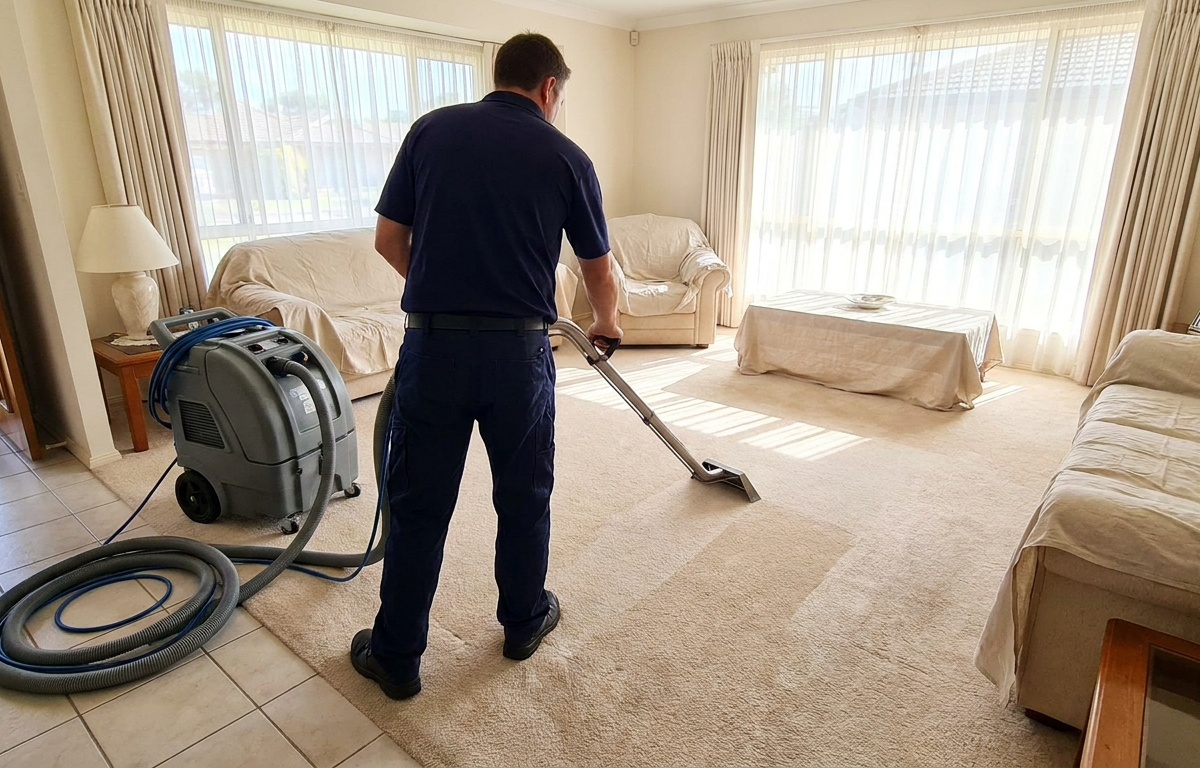
A three-room carpet package on SideWRK's real rate data prices out to $135 — $45 a room, a few dollars under the $55 a solo room runs on its own. That gap is the whole business case for turning a one-time clean into a route: you're not selling loyalty, you're selling math that already favors booking more at once. Most carpet cleaning advice online skips straight to "ask for the repeat business" without ever showing the number that makes repeat business worth asking for in the first place.
The math nobody puts on the invoice
Carpet cleaning bills by the room, and the ticket size for a real house tells the story better than a generic hourly rate ever could. Pull three real lines off a typical job: the three-room package at $135, stairs at $40, a pet-stain treatment add-on at $75. That's $250 for one visit, and on SideWRK's rate report, labor runs about 90% of a carpet ticket — so roughly $25 of that $250 is chemical and pad-protector cost, and the rest is your time and your machine.
Book that same customer twice a year, once ahead of spring pollen season and once before the holidays bring guests through the living room, and one household is worth $500 a year instead of $250 once. A dozen houses on that same cadence replaces the slowest, most expensive part of this business: finding a brand-new customer from a cold start every single time. If you want to run your own numbers before you commit to a plan price, the carpet cleaning cost calculator does the same per-room math with your own rates in place of mine.
Price the return visit at the real rate, not a discount
Here's where I part ways with most of the retention advice floating around for this trade. A lot of it tells you to sell the maintenance plan with a percentage off — ten percent for committing to two visits a year, sometimes more. I'd skip the discount entirely. You already gave a discount once, on the package rate: $45 a room instead of $55, the day the customer booked all three rooms together instead of one. Stack a loyalty discount on top of a volume discount and you're the one paying twice, while the customer never notices the difference between $235 and $250.
What actually works: keep the return-visit price at your real per-room rate, and put the incentive somewhere that costs you almost nothing. Priority scheduling ahead of the holiday rush. A free spot-treatment on one high-traffic hallway between full visits. The customer feels looked after. Your invoice still reads full price, and your margin doesn't quietly erode one loyal customer at a time.
Time the ask to the calendar the house actually lives on
Most retention playbooks tell you to fire an automated reminder on a fixed clock — five months out, then six, then eight, then ten, regardless of what the house needs. That schedule works fine for a subscription box nobody thinks about. It works worse for carpets, because the real trigger for a re-clean isn't a calendar date, it's a season or an event: pollen tracked in on shoes every spring, a new puppy, a move-out inspection, in-laws coming for the holidays.
Write down what you actually saw on the way out the door — two dogs, a high-traffic hallway, someone with allergies — and time the next ask to the season that note points to, not a countdown from the last invoice. A spring reminder that says pollen season's back books better than a generic six-month nudge, because it's specific to that exact house instead of every house on your list at once.
The invoice that sells the second visit for you
A branded, itemized invoice beats a handwritten receipt here for a reason that isn't cosmetic. When a customer can see they paid for three rooms, stairs, and a pet-stain treatment as three separate lines, the value of the next visit is already proven — you don't have to re-explain why carpet cleaning costs what it costs. A $250 invoice broken into $135, $40, and $75 does more selling on its own than a follow-up call ever will, because the proof that the money went somewhere specific is sitting right there in the customer's inbox.
The same logic runs other recurring trades, not just carpets — see how pool service techs turn one cleanup into a monthly contract for the same idea applied to a completely different billing unit. The trade changes. The math that makes a route worth building doesn't.
FAQ
How often should I recommend a carpet cleaning maintenance plan?
Twice a year covers most households — once before spring pollen season, once before the holidays. Homes with pets, kids, or heavy foot traffic can support a third visit, but don't oversell frequency past what the carpet actually needs; past a certain point it reads as upselling, not care.
Should I discount a customer for booking two cleanings a year in advance?
Not by default. The volume discount already happened at the multi-room package rate the first time they booked. A better move is a low-cost perk — priority scheduling or a small free add-on — instead of cutting your per-room price a second time on the same customer.
What's a fair price for a whole-house carpet cleaning?
On real SideWRK ticket data, a three-room package plus stairs and a stain treatment lands around $250, with roughly 90% of that as labor and equipment rather than materials. Your local market and the carpet's condition move that number up or down, but it's a realistic starting point for a mid-size home.
How do I get a customer to commit to a recurring schedule instead of calling only when carpets look bad?
Tie the next visit to a specific, personal trigger you noted at the last job — a pet, an allergy, an upcoming event — rather than a generic time-based reminder. A specific reason books faster than "it's been six months," because it reads like you remembered them, not a mail-merge.
Is a written maintenance plan worth setting up for a one-person carpet cleaning operation?
Yes, even informally. A plan just means the price and timing are already agreed on, so the next booking is a confirmation text instead of a new sales conversation. Keeping the customer's room count, pricing, and notes attached to their job history means you're not reconstructing any of it from memory six months later.
Start turning one-time cleans into a route
Every returning customer is a job you didn't have to win from scratch. Start your free 14-day trial — no card required — and keep your next carpet job's price, notes, and next-visit date somewhere you'll actually find them.