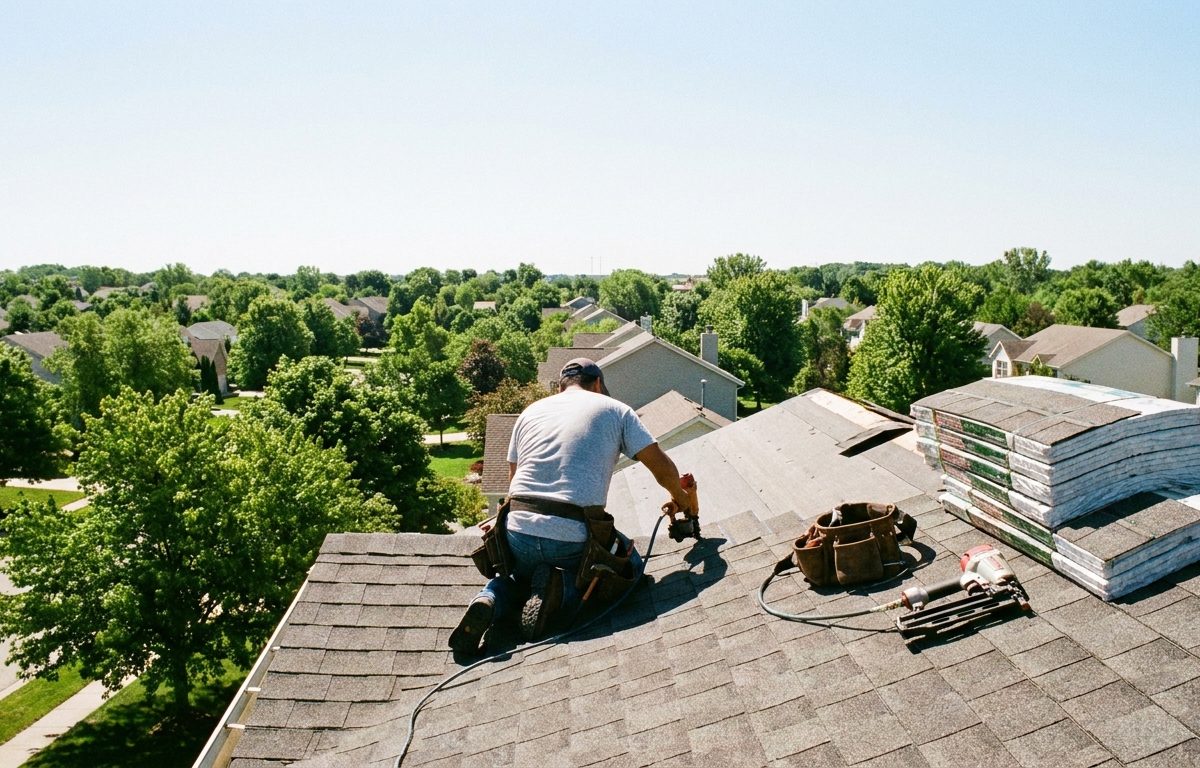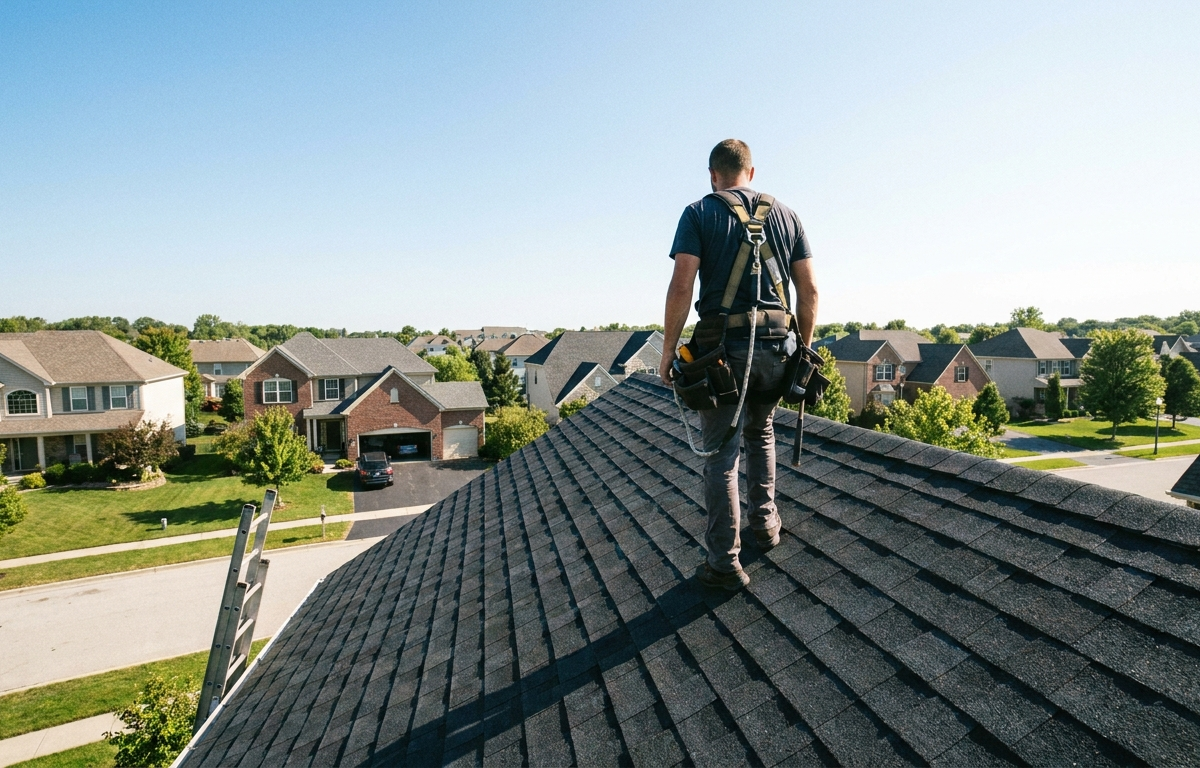
Would you hand $9,500 to a guy with two reviews and an unmarked van? That's the question every homeowner is quietly asking when they search your name, because that's what a full residential replacement runs — 19 squares at the $500-per-square going rate in the 2026 side-work rate data. A roof is one of the biggest checks a homeowner writes all decade, and before they write it, they read everything they can find about the person who'll be standing on their house. If your name doesn't show up with real reviews attached, you're not losing the job. You were never in the running.
Here's the part most roofers get backwards: reviews aren't a reputation nicety in this trade, they're the highest-leverage dollar in the whole business — worth more per ask than in any other trade, because the ticket is enormous and the purchase happens once every fifteen or twenty years. Which leads to an opinion worth arguing with: a roofer's ad budget should be zero until the driveway review ask is automatic. Every dollar you spend on leads while sitting at three reviews is a dollar spent renting trust you could own.
What one review is worth on a $9,500 ticket
Run your own numbers instead of taking anyone's word for it. Say you quote ten full replacements in a season at $9,500 each — $95,000 of quotes on the table. If a thin review page has you closing two of ten and a credible one gets you to three of ten, that single extra close is $9,500 in revenue. Materials on a replacement eat about half the ticket, so that's roughly $4,750 that lands in your pocket — from the same ten quotes, the same truck, the same crew, no extra work except asking.
Now price the ask itself. It takes ninety seconds in a driveway and costs nothing. There is no other ninety seconds in your season worth four figures. That's the whole argument.
The smaller tickets compound the same way. A $150 roof inspection, a $450 shingle repair, a $600 leak call — none of them are life-changing jobs, but every one is a chance to bank another review that helps close the next $9,500 decision. The repair customer you treated like a small job in March is the review that lands the replacement customer in June.
The five minutes that decide whether you get it
Walk the property with the homeowner before you pack up the trailer. Point out the ridge line, the new flashing, the gutter apron — details they'd never notice but will remember you explaining. That walk is proof of the work, delivered by the person who did it, while the roof is still new enough to feel exciting instead of routine.
Then do the boring part: pick up every nail, staple, and shingle scrap before you leave. A magnetic sweep isn't optional. Stepped-on nails are the single most common complaint in bad roofing reviews, and the sweep costs fifteen minutes. A homeowner who finds a roofing nail with a bare foot two weeks later isn't leaving five stars no matter how straight your ridge lines run.
Ask in the driveway, not by email
Most contractors ask for a review in a follow-up email a week later, if at all. By then the excitement has faded to "yeah, it looks fine" and the email is buried under forty others. Ask while you're both standing in the driveway looking up at the finished roof — the highest point of the entire relationship.
Fold it into wrapping up the job, not a separate pitch. While they're signing off on the invoice: "If you're happy with how it turned out, a review helps me more than almost anything — here's the link." Text it or show a QR code they can tap right there. One honest ask, once. No reminder-email campaigns, no "please rate us 5 stars" begging — that reads desperate, and homeowners can smell it.
One roof, one street: the worked chain
Take one finished replacement on a cul-de-sac and work the street the way this trade allows — because unlike a water heater or a panel upgrade, a new roof is visible from every window on the block. Yard sign up for one week. A before-and-after posted to the neighborhood's Facebook group, tagged with the street name. And one direct ask of the happy homeowner: "If the neighbors ever ask who did this, send them my way."
Here's how that chain prices out over the following year:
- The anchor job: full replacement, 19 squares × $500 — $9,500
- Neighbor one, two doors down, has a stain on the ceiling: leak repair — $600
- Neighbor two saw the truck twice, wants the roof checked before winter: inspection at $150, which turns up bad step flashing — flashing repair, $380
- Neighbor three gets your quote in spring off the first homeowner's say-so, up against two strangers with stock-photo websites: full replacement, 19 squares × $500 — $9,500
Chain total: $20,130 — more than double the anchor job, from one street, with zero ad spend. The second replacement is the one to notice: at $9,500 a decision, nobody hires the cheapest stranger when a neighbor they trust points at their own roof and says "him."
When a referral turns into a job, close the loop with the person who sent it — a call, a card, something that shows you noticed. Referrals dry up fast when the sender never hears whether it worked.
When the review isn't a five
Every roofer eventually gets a bad one — a weather delay, a supplier backorder, a homeowner who expected something the estimate never promised. Don't argue in the reply. Acknowledge what happened in a few sentences, state plainly what you did about it, and stop. A calm, specific response often does more for your credibility than the review does damage, because future customers read the response, not just the stars.
What kills a roofing business isn't one bad review. It's the pattern of no response — or a defensive one that makes a stranger reading it six months from now think twice about handing you five figures.
Give the reviews somewhere to point
Reviews convert only if the person reading them can also find real proof behind your name: a page with before-and-after photos, your license number, and the work you actually do. A homeowner comparing three quotes at this price isn't just counting stars — they're checking whether the photos match houses like theirs. If your only online presence is a phone number in a text thread, the reviews you earned have nowhere to land.
The paper side sets the same tone. A branded estimate the homeowner can approve and e-sign from their phone is the first impression the review later confirms. SideWRK's roofing setup sends that estimate and keeps the job history, so when a referral calls, last year's cul-de-sac job is one tap away. Sanity-check your per-square math with the roofing cost calculator, or see it running for roofing. The same driveway-ask logic runs in trades without a visible before-and-after — how plumbers get referrals with no ad budget is the version tuned for work the neighbors can't see from the street.
FAQ
What is one review actually worth to a roofing business?
On $9,500 replacement tickets, moving your close rate from two-in-ten quotes to three-in-ten is worth $9,500 in revenue per ten quotes — about $4,750 after materials. A stronger review page is usually the cheapest way to move that rate, since the ask costs ninety seconds and nothing else.
When's the best time to ask a roofing customer for a review?
In the driveway, right after the walk-around, while the homeowner is looking at the finished roof for the first time. Satisfaction peaks there and fades to "it's fine" within a week — which is why the follow-up email version mostly gets ignored.
Do yard signs and neighborhood posts actually generate roofing leads?
For about a week after completion, yes — the roof is new, visible, and neighbors are noticing. A street-tagged before-and-after post reaches the exact households who can see the work from their own driveway. Leave the sign up a month and it reads as stale.
How much work can one finished roof generate on its own street?
A realistic chain off one $9,500 replacement: a $600 leak repair, a $150 inspection that becomes a $380 flashing repair, and a second $9,500 replacement in spring — about $10,600 in follow-on work, all from the ask and the sign.
How should I respond to a bad roofing review?
Name what actually happened, say what you did or will do about it, and stop — no arguing, no essay. Future customers judge you on the response more than the review, and a specific, calm reply next to an angry rant usually wins the comparison.
None of this replaces straight ridge lines. It makes sure they get seen — and paid for at the rate they deserve. Start your free 14-day trial — no card — and put the ask, the estimate, and the follow-up in your process instead of leaving them to chance.