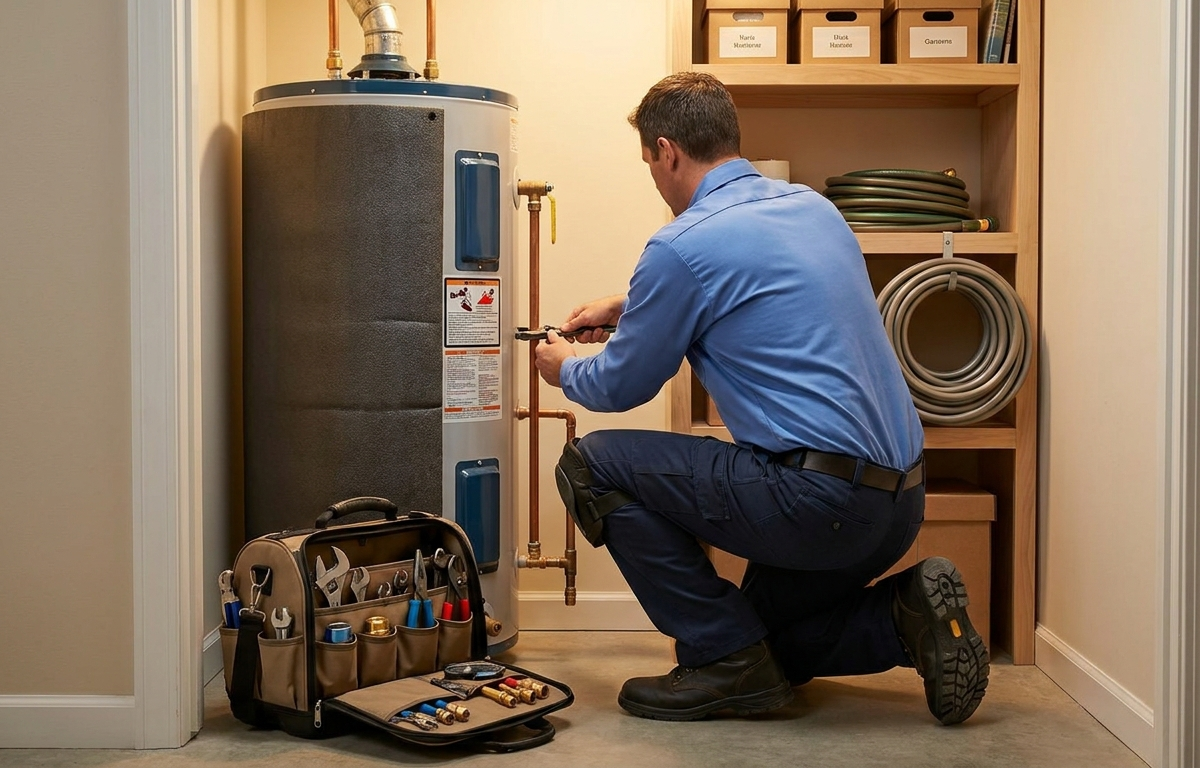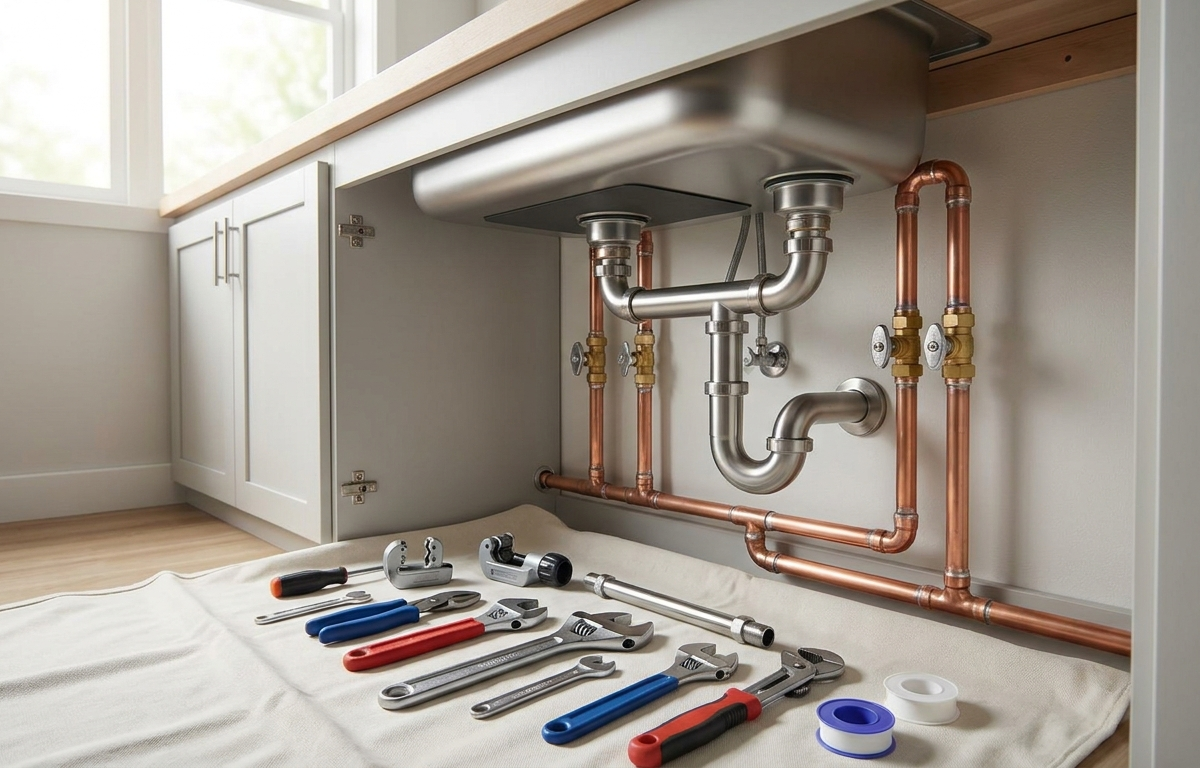
Say you finish a kitchen drain call at 9 PM on a Tuesday. Dishes stacked in both sides of the sink, counters soaked from an hour of hopeless plunging. You pull a wad of grease from the trap, snake six feet of line, and the water spirals down. The homeowner exhales like they've been holding their breath since noon.
That exhale is your entire marketing budget. Most plumbers walk out and hope the customer thinks to leave a review later. Here's the blunt version of what this article argues: the texted-later review ask is a coin toss you always lose. If you don't have the review before your van leaves the curb, you don't have it.
Why plumbing word-of-mouth hits harder
A customer who hires a painter was in a fine mood when they called. A customer whose water heater is leaking at 6 AM is not. They're stressed, they don't know the cost, and they don't know if the stranger showing up will make it worse. Show up fast, diagnose plainly, give a straight number, fix it — and the relief is out of all proportion to the repair.
That relief is the referral engine. A calm customer recommends a painter when asked. A rescued customer volunteers you: "Save this number. He came same-day and it wasn't even that bad." No five-star review carries the weight of that sentence said across a fence.
The catch: you have to earn both halves. The competence, and the ask at the right moment.
The 60-second ask, and the math behind the timing
The worst time to ask for a review is with the invoice. The customer is looking at the number, not feeling the gratitude — you've chained the review to the bill.
The right moment is right after you show them the fix works. Water flowing, no drip. Then:
"Glad we got that sorted. If you don't mind, a Google review goes a long way for me — I don't run ads, that's mostly how people find me. I'll text you the link right now."
And you text it right then, while you're packing up. Direct link to the review field. Not your website, not a landing page.
Now the numbers, framed the only honest way I can frame them — as the test you should run yourself. Take your next 20 jobs. Ask on the spot with the link texted before you leave on ten of them; send a "thanks again, here's my review link" text that evening on the other ten. Every plumber I'd bet on lands somewhere near the same split: the on-the-spot ask converts around one in two, the evening text closer to one in ten. Fifteen minutes after you leave, they're worrying about dinner. The moment doesn't survive the drive home.
Across a year of 100 jobs, that's the difference between roughly 50 reviews and roughly 10. Same work. Same happy customers. The only variable is when you asked.
One referral chain, priced out
Reviews win you strangers. Referrals win you neighbors — and in plumbing, one good job starts a chain with real dollars on it. Using the rates where solo plumbing sits in the 2026 side-work rate data — $125 service call, $200 drain clearing, $275 faucet replacement, $300 toilet, $1,600 water heater install — here's a chain that starts with that Tuesday-night drain:
| Link in the chain | Job | Billed |
|---|---|---|
| The original call | Kitchen drain clearing | $200 |
| She tells her neighbor | Water heater install | $1,600 |
| Neighbor's brother-in-law | Faucet replacement | $275 |
| Same house, a month on | Toilet replacement | $300 |
| Chain total | $2,375 |
A $200 drain job turned into $2,375 of work, and your acquisition cost for the last $2,175 of it was zero. That water heater in the middle is the one to notice: the biggest tickets in this trade almost never come from strangers. Nobody price-shops three plumbers for a $1,600 install when their neighbor already handed over a name that showed up at 9 PM and fixed it.
You can't force the chain. You can make every link easier: do the job clean, ask on the spot, follow up.
What actually earns the five stars
Five-star plumbing reviews rarely mention pipe. Every decent plumber clears the drain. The reviews talk about everything around it.
Showing up when you said — or twenty minutes early on an emergency call, which customers remember more vividly than any discount.
Explaining what you found. "Scale buildup right at the elbow — common with hard water. Run the dishwasher hot once a week and it'll slow down." Thirty seconds, and the customer feels respected and repeats it word for word when they refer you.
The no-surprise invoice. If the $200 drain job is turning into more, you call before you do the extra work. Every time. A quote that says $200 and a bill that says $340 with no call in between is where competent plumbers lose the fifth star — regardless of how clean the work was.
Leaving the space cleaner than you found it. It gets mentioned in reviews precisely because it isn't universal.
Referrals before you have reviews
Starting from two reviews, strangers can't find you yet — so the first jobs come from people, not profiles.
Fastest source: adjacent trades. HVAC techs, electricians, and handymen trip over plumbing problems weekly — the rusting water heater behind the furnace, the active leak behind the cabinet. Text every tradesperson you've worked alongside, even years back: "Doing plumbing side work now. Run into anything that needs a plumber, I'd love the referral — and I'll send work your way too." Then actually follow through when they send someone.
Second source: the people who already trust you. Neighbors, former coworkers, family. They can't review work you haven't done, but they can say "I know a plumber." Text five of them this week.
The two follow-ups that compound
A week or two after any job: "Hey, wanted to make sure everything's still holding up with that drain. Anything comes up, let me know." Twenty seconds. Almost nobody does it, and if a slow drip did develop, you hear about it before it becomes a callback or a two-star review.
Before winter, text everyone you've worked for: "Doing water heater flushes before it gets cold — usually runs about $85 as an add-on visit. Want on the list?" Some say yes. Every yes is a booked job from someone who already trusts you, and every visit is another shot at a $1,600 install the day their tank finally quits.
Skip the formal referral program — cards, codes, tiers. That's overhead for a $1.5M company, and formalizing word-of-mouth makes it feel transactional. A notes app and a calendar cover twenty customers fine.
Building the plumbing side business and want the estimates, invoices, and follow-ups handled from your phone? Start your free 14-day trial — no card. Everything for the trade lives at /plumber, and there's more on repeat business in how mobile mechanics turn one job into five years of work and why low bids cost more than they look.
FAQ
When should I ask a plumbing customer for a review?
The moment you show the fix works — water flowing, no drip — and text the direct review link before you leave. Run it across 20 jobs and compare: the on-the-spot ask lands around one in two, while a that-evening text lands closer to one in ten. The moment doesn't survive your drive home.
What is one plumbing referral chain actually worth?
A single $200 drain clearing can chain into a neighbor's $1,600 water heater install, a $275 faucet replacement, and a $300 toilet — $2,375 total, with zero acquisition cost past the first job. The big tickets in this trade come through referrals, not price-shopping strangers.
How do I get plumbing work before I have any reviews?
Through people, not profiles: text the HVAC techs, electricians, and handymen you've worked alongside — they hit plumbing problems weekly and will send work if they know you exist. Then tell five people who already trust you that you're taking side work.
Do surprise charges really cost plumbers reviews?
More than anything else. A job quoted at $200 that bills at $340 without a mid-job call produces a three-star review no matter how good the work was. Call before any extra work, every time — the no-surprise invoice is the single most repeated theme in five-star plumbing reviews.