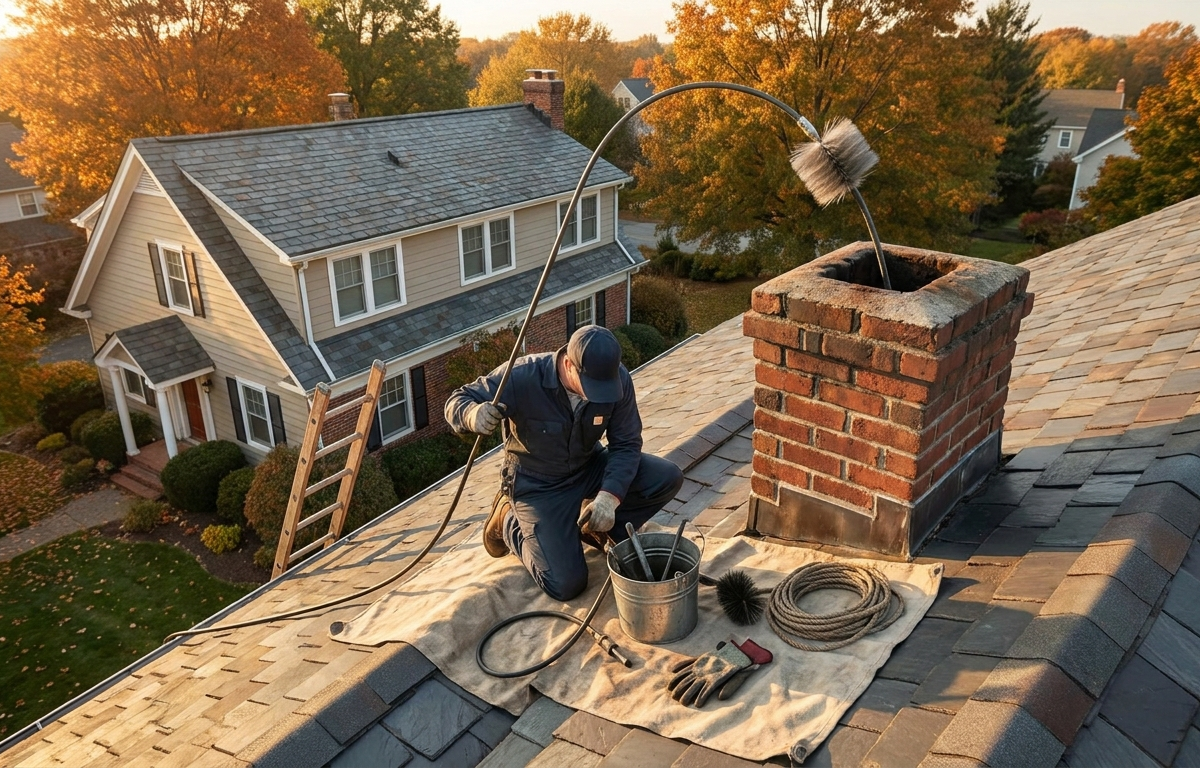
Ask a chimney sweep how they built their route and most of them will tell you the same thing: the second visit is easier to sell than the first one ever was. Nobody has to be convinced that a chimney needs cleaning once a year — NFPA 211 says so, their insurance agent might say so, and the black creosote on your brush proves it every time. The hard part isn't the pitch. It's remembering to make it before the customer forgets you exist and calls whoever shows up first in a fall search.
The math behind one annual reminder
Put real dollars on it. A Level 1 sweep — the standard annual cleaning — bills at $189 in the 2026 side-work rate data. Sixty customers who remember you exist and rebook every fall is $11,340 a year of work you did not have to advertise for, cold-call for, or win back out of a map pack. The cost of keeping those sixty: one reminder message each, sent from a list you built by tagging last year's invoices by month.
Now price the alternative. Losing those sixty and replacing them with strangers means sixty new customers through ads and search. Even at a modest $30 a lead with half of them closing, that's $3,600 of ad spend to rebuild revenue a free reminder would have kept — and that's before you count the hours quoting, the no-shows, and the fact that a first-time customer books later and trusts you less than one you swept last October. Retention isn't a soft skill in this trade. It's the highest-margin line on the whole book.
Why summer is the best time to send it
Fall is when everyone panics and books the first available sweep before the first cold snap. Summer is when nobody's thinking about their fireplace, which is exactly why it works: a reminder that lands in June or July has zero competition in the inbox and lets you fill slower months with pre-booked work instead of scrambling in October. Frame it as a head start, not a chore — "book now and skip the fall waitlist" gives the customer a real reason to act before they need to.
What actually goes in the reminder
Keep it short and specific to what you found last time. "Last year we cleared moderate creosote buildup near the flue liner — about normal for a household burning twice a week, and you're due for the annual inspection NFPA 211 calls for." A generic "time for your annual cleaning!" blast reads like spam and gets ignored. A note that references their actual chimney, their actual burn habits, and the actual standard behind the recommendation reads like a professional who remembers the job — which is worth more than any discount you could offer.
Sell the reserved slot, never the coupon
Here's a hill worth dying on: never discount the annual sweep to win the rebooking. A coupon teaches the customer that the sweep is optional — a thing with a flexible price that can wait for a better deal. A reserved slot teaches them it's infrastructure, like the furnace tune-up. Offer the plan outright at the end of the first visit: a locked-in annual inspection date and first pick of the fall calendar, at full price. Customers who burn wood regularly want the certainty of a held date far more than they want $20 off, and you want to know October's calendar is half full before Labor Day. "Keep your spot" beats "10% off" every year you run the route, and it protects the $189 that sixty-customer math depends on.
What a first visit is really worth
The rebooking engine only runs if the first visit earns it, and the first visit on a neglected chimney is rarely just a sweep. Take a new customer who skipped two seasons: the camera goes up the flue and finds glazed creosote the brush won't touch, and the cap up top has rusted through.
- Level 2 inspection with camera: $279
- Heavy creosote removal (replaces the standard sweep): $320
- Chimney cap install: $350
Ticket: $949 — priced from the same defaults as the sweep itself, alongside the $125 basic service call, $189 Level 1 sweep, and $485 crown repair. Every line documented with a photo, every recommendation tied to what the camera saw. That customer just learned two things: skipping seasons costs real money, and you're the one who caught it. The $189 annual slot sells itself on the way out the door.
Don't let the inspection become a commodity
Every sweep in your market can run a brush through a flue. Fewer of them document what they find. Photograph the crown, the flashing, the flue liner condition, and any creosote glazing before and after the sweep, and hand the customer a short written summary — not a full inspection report, just three or four lines noting what's normal and what to watch. That documentation does two things: it protects you if a chimney fire ever happens on a system you serviced, and it gives the customer something concrete to remember you by when the reminder lands next June.
Get the review while the fire's still cold
Ask for the review immediately after you show the customer the swept flue and walk them through the photos, not three days later over text. A homeowner who just watched you catch a cracked flue tile or a nesting animal before it became a real problem is primed to say so publicly right then. Waiting turns a five-star review into a maybe, and referrals work the same way: a happy customer mid-conversation is far more likely to mention you to a neighbor than one who's moved on to thinking about dinner.
Where SideWRK does the reminding for you
The whole system above depends on records you can actually find eleven months later, which is where most one-person operations quietly fail — the note about last year's creosote buildup is on a napkin somewhere, or it isn't anywhere at all. SideWRK keeps every past job, photo, and invoice tied to the customer, so pulling up "what did we find at that house last October" takes ten seconds instead of a memory test. The chimney sweep trade page shows how the app is set up to speak your trade specifically, and the pool service guide on turning cleanups into contracts and the HVAC maintenance plan playbook walk through the same recurring-revenue logic from two other seasonal trades.
Want to see how the estimate-to-invoice loop looks for a sweep route before you commit to anything? Try the live demo loaded with chimney sweep jobs, then start free and load in this season's customer list. Five jobs a year free, no card, then $19/mo or $190/yr.
FAQ
How much should a chimney sweep charge in 2026?
The working defaults: $125 for a service call or basic inspection, $189 for a Level 1 sweep, $279 for a Level 2 camera inspection, $320 for heavy creosote removal, $350 for a cap install, and $485 for crown repair. A first visit on a neglected chimney commonly stacks several of those — the camera-plus-glaze-plus-cap example above bills out at $949.
How often should a chimney actually be swept?
NFPA 211 calls for at least one inspection a year for every chimney, and actual cleaning is triggered once creosote buildup reaches about 1/8 inch, or immediately if any glazed creosote is present. Most single-fireplace households need one sweep a year; heavy wood burners often need two.
When is the best time to send an annual chimney cleaning reminder?
Summer, several months before heating season. A reminder sent in June or July has almost no competition in the inbox and lets you pre-fill your fall calendar instead of fighting for attention during the October rush when everyone else is also emailing.
How do I keep chimney customers coming back every year without discounting?
Reference the specific findings from their last visit instead of sending a generic blast, and offer a reserved annual slot rather than a price cut. A held date sells certainty; a coupon teaches customers the sweep is optional. At $189 a sweep, sixty customers who rebook off one reminder are $11,340 a year you never had to advertise for.
What should I document at every chimney inspection?
Photograph the crown, flashing, flue liner, and any creosote glazing before and after the sweep, then give the customer a short written summary of what's normal and what to watch. It protects you if anything goes wrong later, and it's the raw material for next summer's reminder — the specific detail that makes your message impossible to confuse with spam.
When in the visit should I actually offer the annual slot?
Before the ladder comes off the roof. The end of the first visit is the only moment you get where the flue is clean, the photos are still on your phone, and the customer has just seen for themselves what was up there — the held date sells itself against that. Bring it up a week later in an email and you're asking somebody to commit to a fireplace they have already stopped thinking about.